The Economics of Inherited Land
The largest 1% of farms operate about 70% of farmland. That is not 1% of people, and not half of all land.
No global census measures how much of that farmland was inherited.
Three numbers
- 70 — percent of world farmland operated by the largest 1% of farms. Source: International Land Coalition, Uneven Ground; FAO farm census synthesis.
- 9 — percent of agricultural land operated by farms under 2 hectares, which are about 85% of farms. Source: FAO, 2025 update.
- 3 — percent of agricultural land value held by the poorest 50% of rural people in sampled countries. Source: International Land Coalition, 2020.
What the data shows
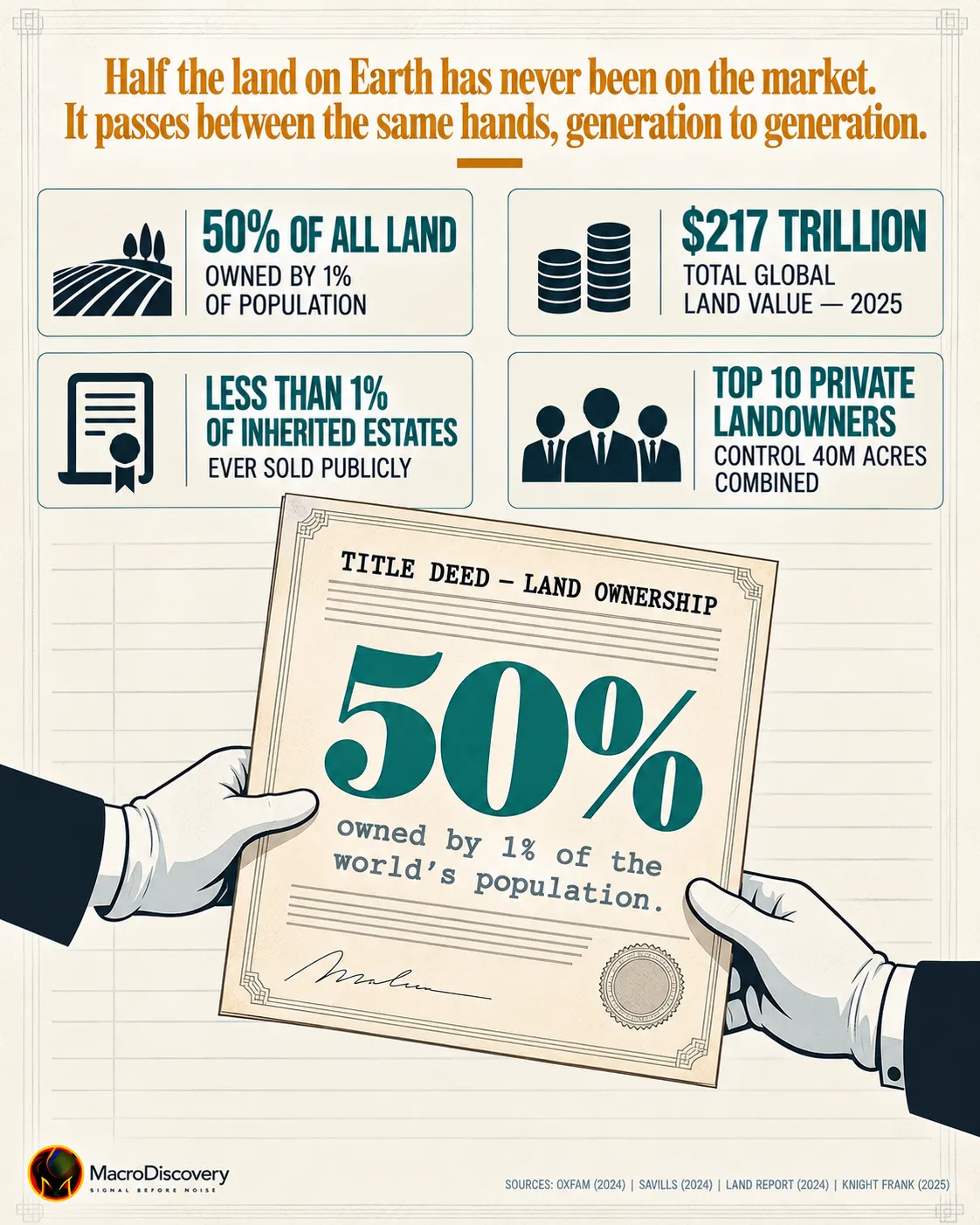
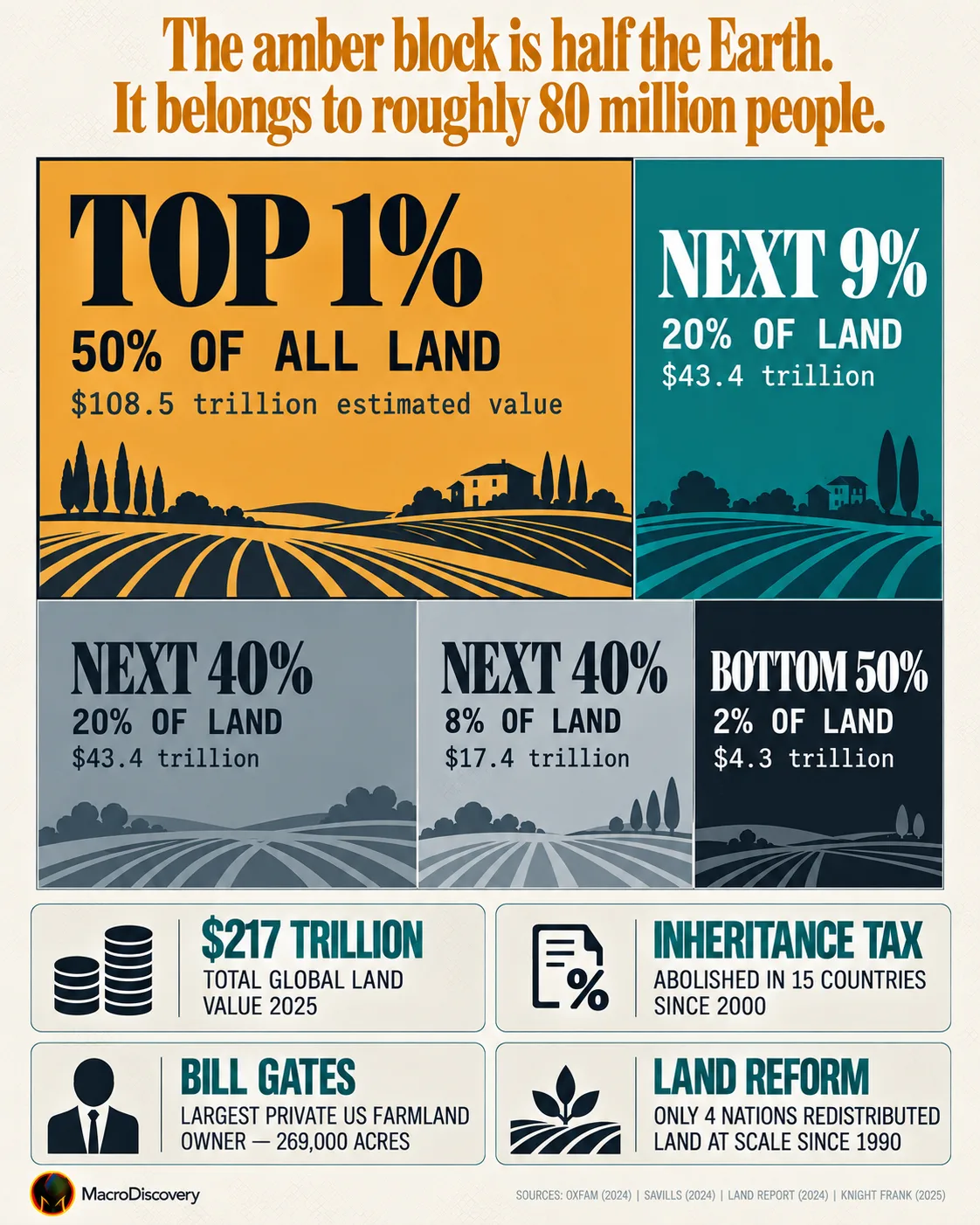
A common claim is that 1% of the world’s population owns half the land on Earth, much of it inherited. The fact is the published figure is about farms, not people, and about farmland, not all land. The largest 1% of farms operate more than 70% of the world’s farmland, according to the International Land Coalition’s 2020 report Uneven Ground and the FAO farm-size synthesis. Ice, desert, forest, cities, and public land are outside that count.
A 2025 FAO update, covering about 579 million farms, finds a similar split. Farms under 2 hectares are about 85% of farms and operate about 9% of agricultural land. Farms over 50 hectares are under 1% of farms and operate about 75% of that land. The ILC also found that the richest 10% of rural people in sampled countries hold about 60% of agricultural land value. The poorest half hold about 3%.
| Group | Share |
|---|---|
| Largest 1% of farms | more than 70% of farmland operated |
| Farms over 50 hectares | under 1% of farms; about 75% of land |
| Farms under 2 hectares | about 85% of farms; about 9% of land |
| Richest 10% of rural people | about 60% of land value |
| Poorest 50% of rural people | about 3% of land value |
Farm shares from ILC 2020 and FAO 2025. Value shares are for sampled countries, not a world census of all people.
How it was measured
The 70% figure counts farm operations, from agricultural censuses. A farm can be a family holding, a company, or a set of plots under one operator. It is not a count of the richest 1% of all people. “Operate” is not always the same as “own.” Contract farming and multiple plots can hide who controls the land.
The ILC adjusted census figures for land value and for people with no land. That raised measured rural land inequality by about 41% versus area-only census counts. Inheritance is a common way land changes hands. Neither the ILC nor the FAO publishes a global share of farmland that passed by will or by custom.
What it means
It is settled that farmland is concentrated in a small share of farms, and that small plots are most of the farm count. It remains uncertain how much of that land was inherited, bought, or leased, and who holds the title. Use “1% of farms” and “farmland.” Do not use “1% of people” or “half the land on Earth.”
Common misreadings
- This figure is not 1% of the world population. It is the largest 1% of farms.
- This does not include all land on Earth. Forests, ice, cities, and public land are outside the farmland count.
- A family farm is not the same as a small farm. FAO says family farms are most farms and most food by value. Farms under 2 hectares are a smaller slice of land.
Where the numbers come from
How we built this
- Dataset: ILC Uneven Ground (2020) and FAO farm-size syntheses (2021 and 2025).
- Scope: Agricultural land and rural land value. All land on Earth, and inheritance shares, excluded because they are not in these sources.
- Figures: 70%, 9%, 3%, 60%, and 85% used as published. Ranges left as “about” where the source rounds.