The World’s Most Polluted Rivers
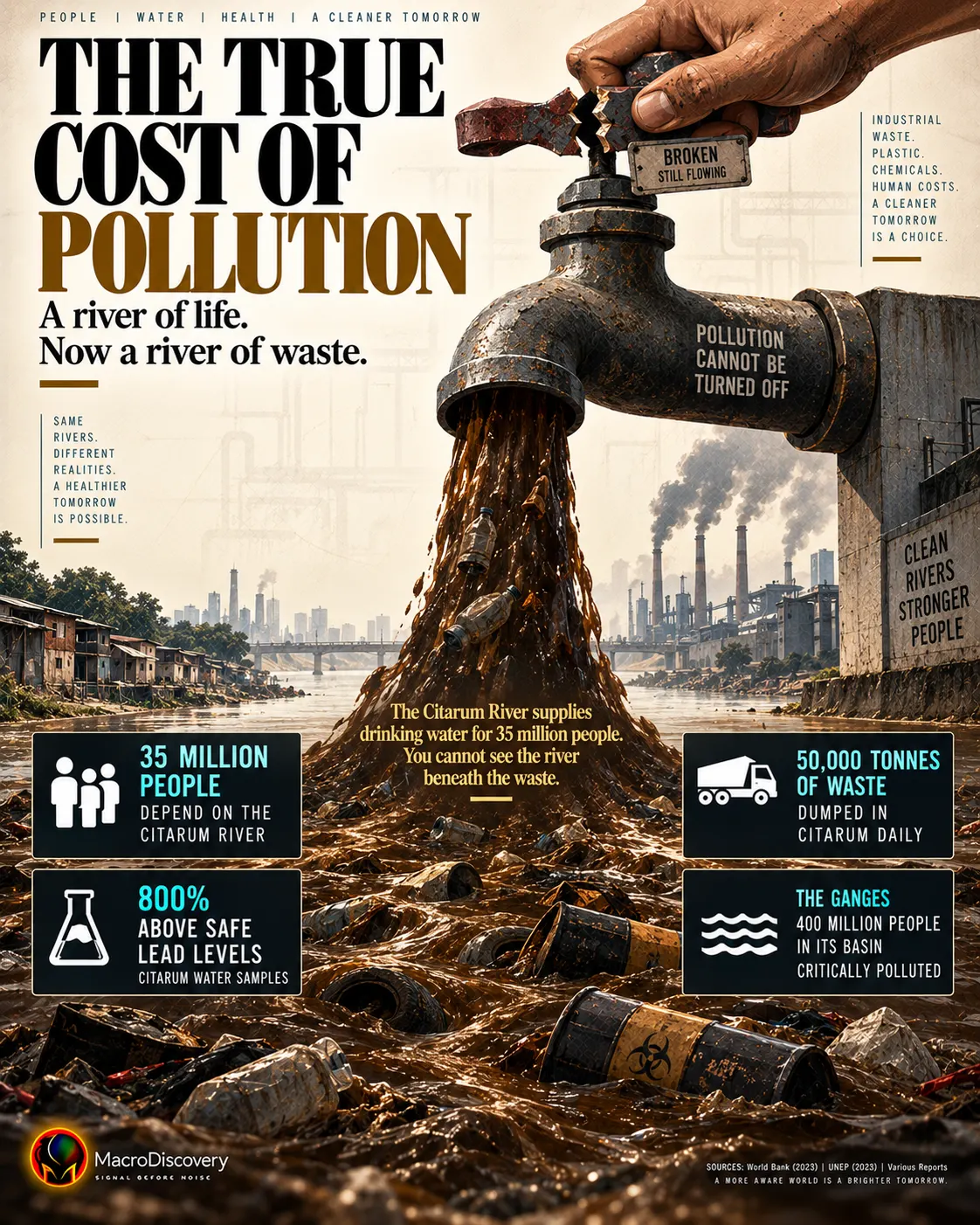
The Citarum supplies water toward Bandung and greater Jakarta — about 35 million people in those two metros. In stretches, you see trash before you see the river.
That is not a world ranking. Plastic, sewage and heavy metals do not share one score. The Ganges, the Yamuna through Delhi, and Dhaka’s Buriganga are other disasters. They are not runners-up in a league.
West Java’s Citarum is a short river with a long tap. The Asian Development Bank has described it as water for the Bandung metropolitan area — almost 10 million people — and for greater Jakarta, about 25 million. Add those two systems and you get the 35 million in the subtitle. That is who drinks, irrigates and powers off this basin. It is not a census of everyone standing on the bank.
ADB also documented what the water carries: biological oxygen demand many times the limit, and fecal coliform in some upper-basin samples more than 5,000 times a reference threshold. Textile plants around Bandung dump dye and metals. Households without sewers dump the rest. In photographs the surface is plastic. That is the “barely visible” line. It is a description of a reach, not a satellite measurement of the whole 300 kilometres.
These rivers are famous for different poisons
- —Citarum · IndonesiaTextiles + sewage. Water toward Bandung and Jakarta. ADB: among the dirtiest documented.
- —Ganges · IndiaHuge basin, untreated sewage, ritual and municipal load. A different scale of people.
- —Yamuna · Delhi stretchA short urban reach fed by drains. DPCC still finds BOD and solids far over limits.
- —Buriganga · DhakaTannery and municipal waste. Repeatedly listed among the world’s worst urban rivers.
- —Others, same warningPasig, Matanza-Riachuelo, stretches of the Yellow River. Famous, not scored against Citarum.
A river can fail on plastic and pass on metals, or the reverse. “Most polluted” without a metric is a magazine caption.
Two cities on one tap
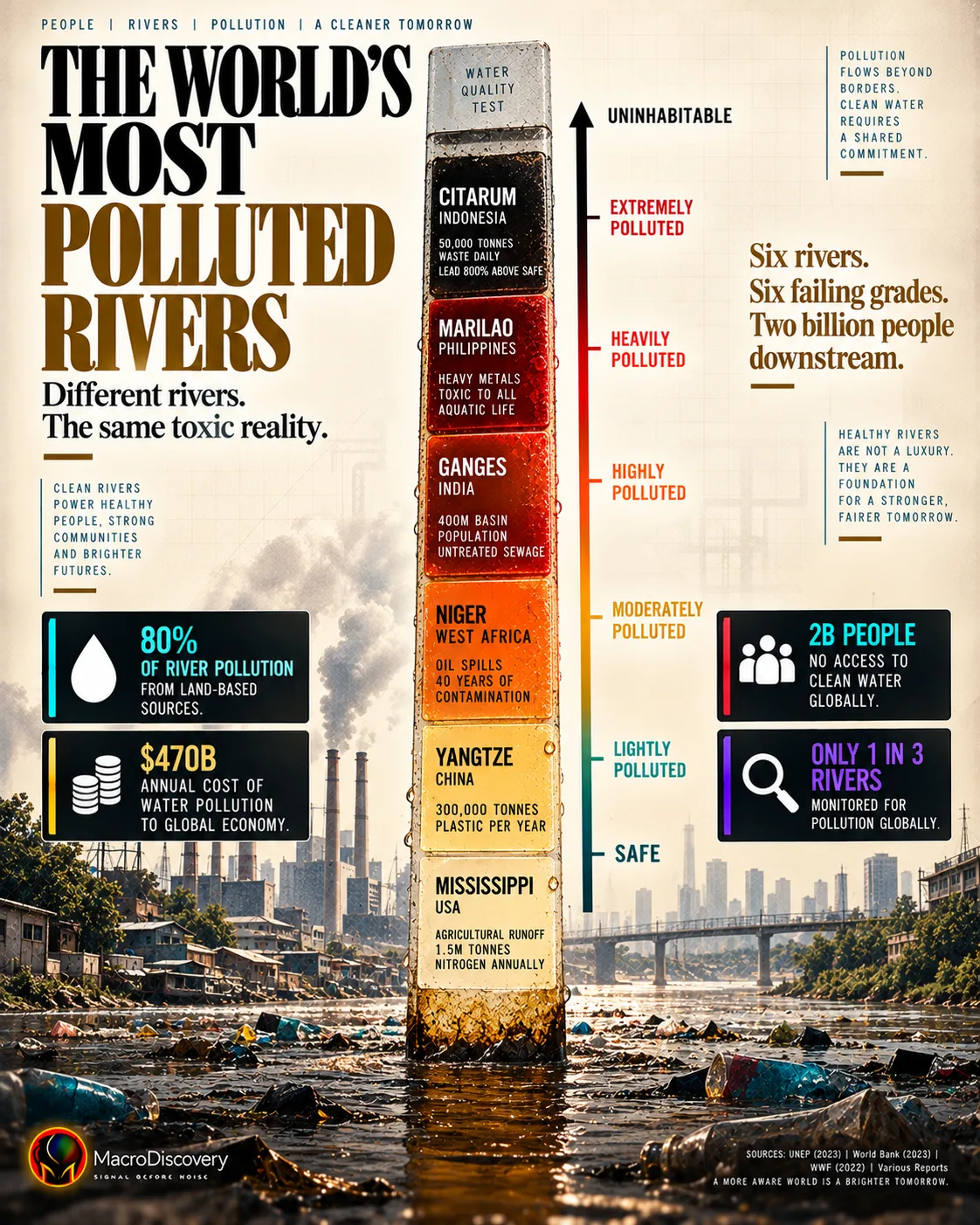
ADB’s accounting is about water allocation, not a headcount in the watershed. Jakarta has drawn on a cascade of Citarum reservoirs — Jatiluhur among them — for a large share of municipal supply, with plans at times to raise that share as groundwater in north Jakarta fails. Bandung sits upstream and pollutes the same water Jakarta later treats.
Domestic waste, not just factories, drives much of the oxygen demand. ADB put about two-thirds of BOD in the upper basin on households and towns, the rest on industry and farms. Cleanup programs (Citarum Harum, ADB and World Bank loans) have run for years. Visible trash has moved in some reaches. The coliform story is slower.
Upstream on the Citarum
Where much of the textile load enters.
Downstream tap
Reservoirs on the Citarum feed a slice of the capital’s water.
Documented upper-basin sites
ADB citing earlier sampling. Not every kilometre, every day.
Upper Citarum · ADB
Industry is the photograph. Sewage is the oxygen math.
A river that supplies two metros and disappears under plastic is not a ranking. It is a utility with a lid on it.Macro Discovery reading of ADB’s Citarum water-supply map
35 million is a tap. Five million is a bank. Do not swap them.
Some pages say five million live in the basin. Some say 25. The ADB water story is cleaner: Bandung plus Jakarta systems that drink from this cascade. Adding 10 and 25 is how you reach 35 million without inventing a census. That number is “who is on the pipe,” not “who can see the garbage from their door.”
Listicles that crown Citarum number one and Ganges number two are mixing plastic cover, fecal counts, and basin population. The Ganges argument is scale — hundreds of millions in a holy drainage. The Yamuna argument is a 22-kilometre drain through a capital. The Buriganga argument is a tannery city. Keep the captions on the right river.
Editorial reading of ADB Citarum water-supply figures and published coliform/BOD notes. ADB did not write this box.If you remember two things
~10 million + ~25 million = the 35 million
Bandung and greater Jakarta systems. Not a claim that 35 million people live in the Citarum valley.
There is no sanctioned world ranking of dirty rivers
Citarum, Ganges, Yamuna, Buriganga are documented disasters on different metrics. Not a scoreboard.
Short answers
A tap count, not a medal table
- 35 million: ADB — Bandung metro almost 10 million + greater Jakarta about 25 million receiving Citarum water. Macro Discovery sum of those two published figures.
- Pollution: ADB notes on BOD (about 9× in cited work) and fecal coliform (>5,000× at some upper-basin sites); textile and domestic shares (about 36% / 64% of BOD in that study).
- Other rivers: named from repeated national-monitor and public-health documentation, not from a ranked index we invented.