What Every Dashboard Warning Light Color Means — Red, Yellow, Green Explained
Key Takeaways
- A flashing check engine light is yellow in color but requires the same immediate action as a red light — pull over, do not keep driving.
- The SRS/airbag warning light lets your car drive normally, which is why most drivers ignore it. In any collision while it is on, your airbags may not deploy.
- A traction control light that flashes briefly while cornering or accelerating is normal — it means the system is working. A solid, permanent traction control light means the system has failed.
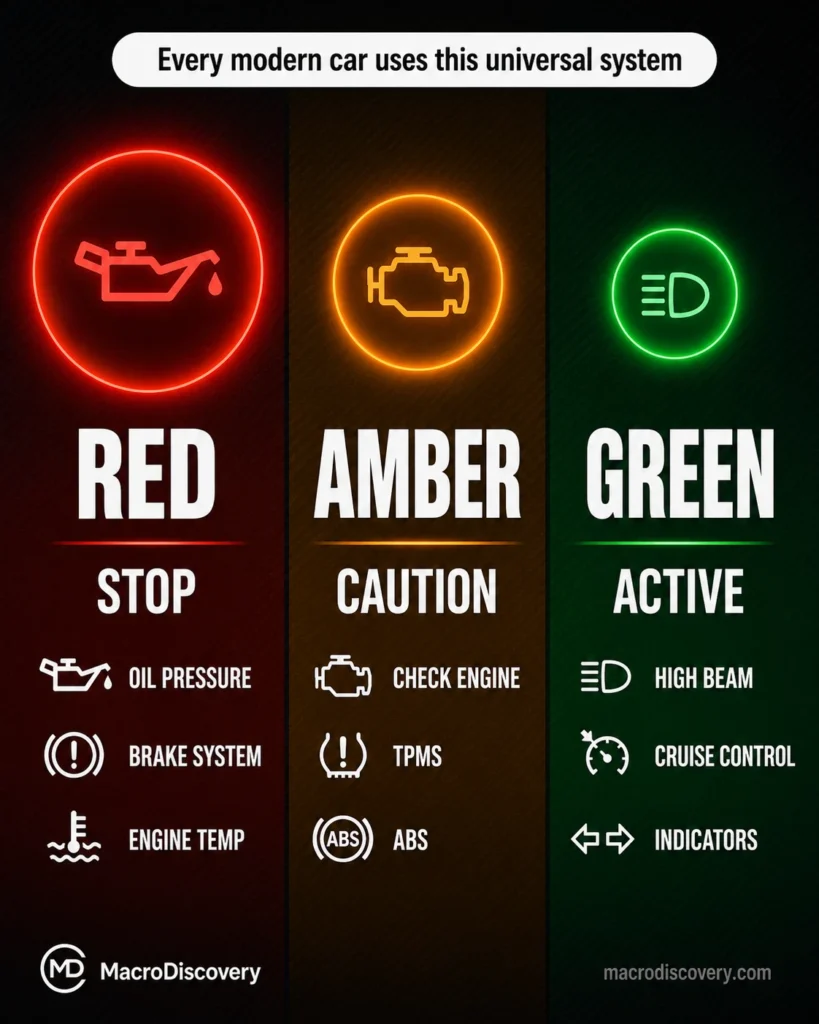
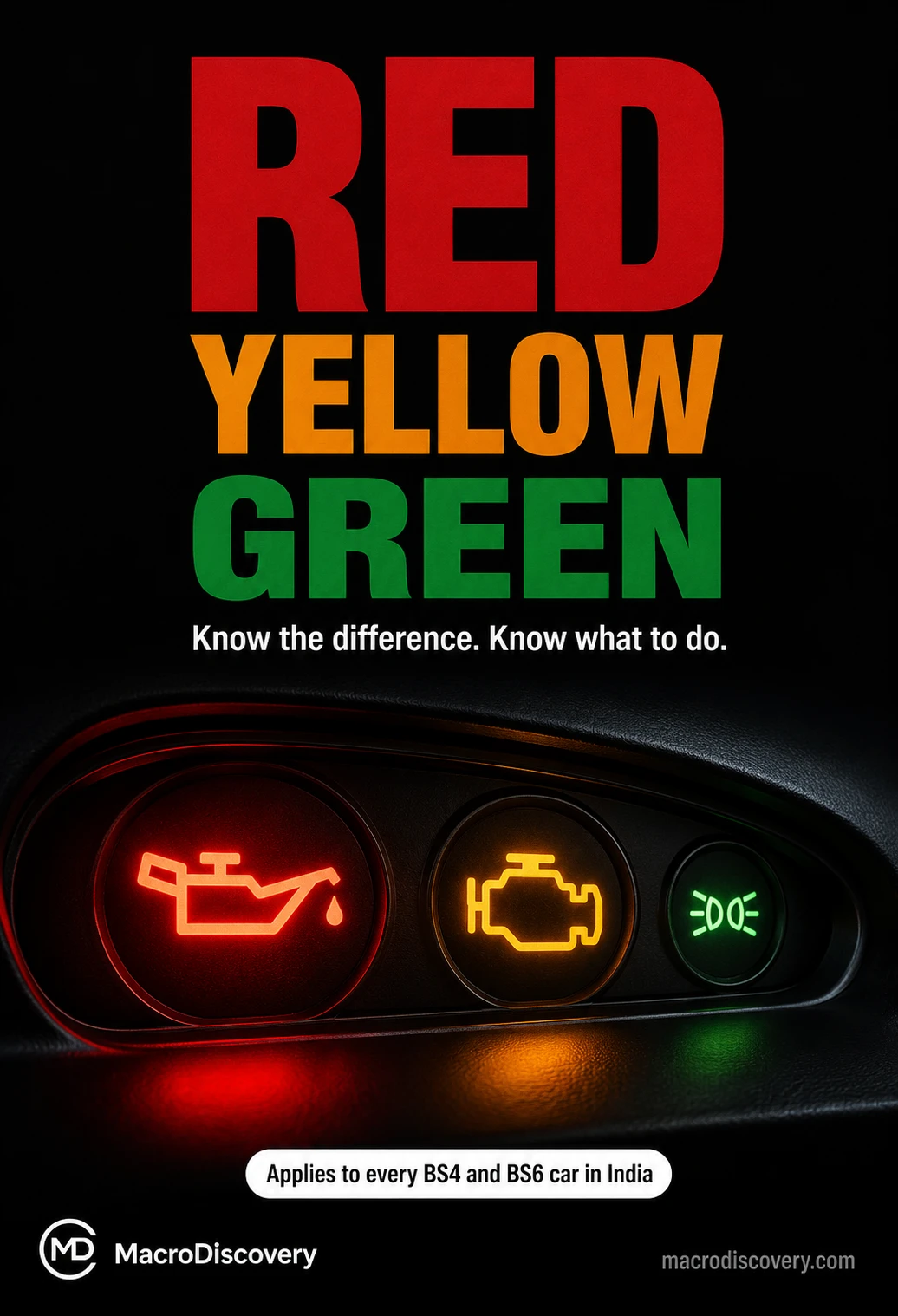
The Four-Color System
Red
A serious malfunction or safety risk. Stop immediately or as soon as it is safe. Do not continue driving normally.
Yellow / Amber
A fault has been detected. The car is safe to drive a short distance to a workshop, but do not ignore or delay.
Green
A system or feature is currently active. No action required — this is the car confirming something is switched on.
Blue
Same as green — a system is active. Most commonly the high beam headlight indicator. No action required.
Steady vs. Flashing — This Distinction Matters
A steady light indicates a stable fault. A flashing light means the problem is active and escalating right now. A flashing check engine light, for example, signals an active engine misfire that is sending unburned fuel into the exhaust system and actively damaging the catalytic converter. Treat any flashing warning light — regardless of color — with the same urgency as a red light. Pull over as soon as it is safe to do so.
🔴 Red Warning Lights — Act Immediately
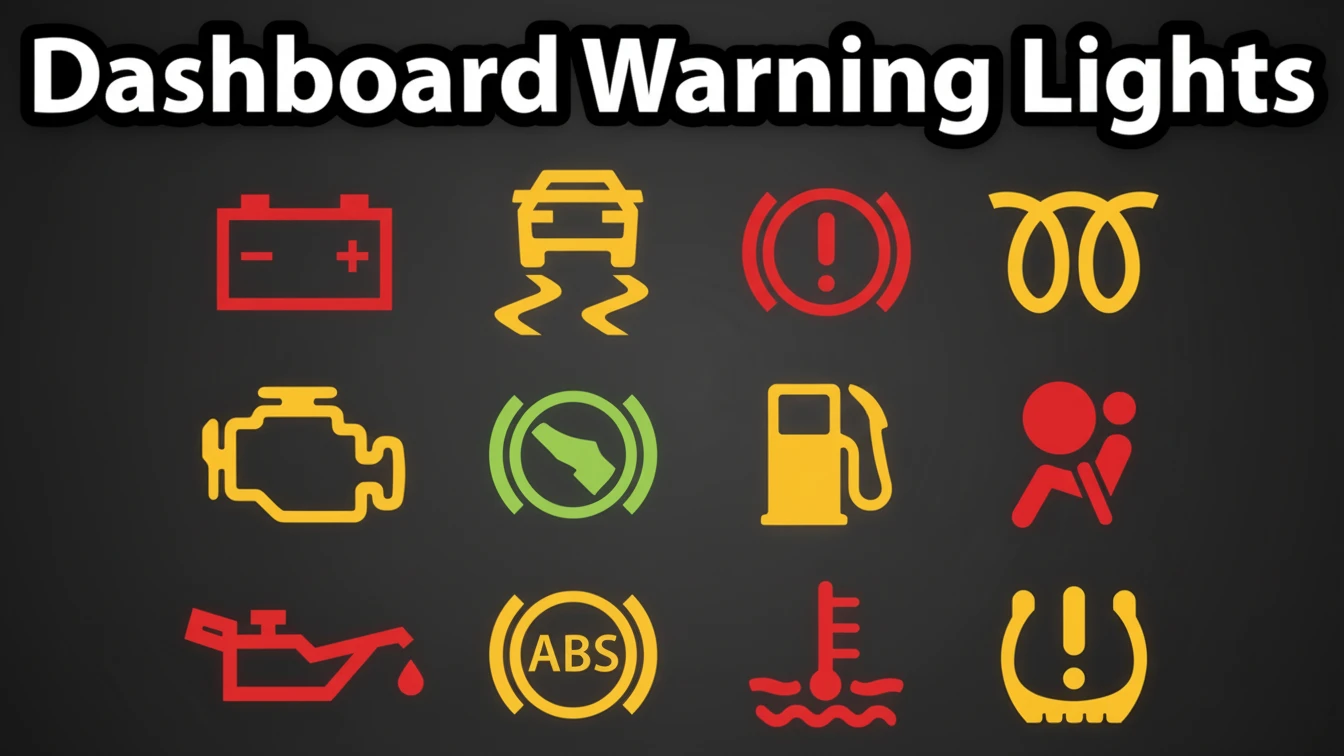
| Warning Light | What It Means | What To Do | Action |
|---|---|---|---|
| Oil Pressure Oil can with dripping drop |
Engine has lost oil pressure — internal parts are no longer lubricated | Stop immediately and turn off the engine. Engine seizure is possible within minutes of continued driving | Stop Now |
| Engine Temperature Thermometer in wavy lines |
Engine is overheating — coolant loss or cooling system failure | Pull over immediately, turn off engine, allow to cool. Never open the radiator cap when hot | Stop Now |
| Brake System ! in circle or word BRAKE |
Low brake fluid, hydraulic fault, or parking brake engaged | First check if parking brake is on and release it. If light stays on, braking is compromised — stop driving | Stop Now |
| Battery / Charging Rectangle with + and – |
Alternator has stopped charging the battery — car is running on battery power alone | Turn off AC, radio, and all non-essential electrics. Drive directly to the nearest workshop — car will stall when battery depletes | Stop Soon |
| Airbag / SRS Seated figure with airbag deployed |
Airbag or seatbelt pretensioner system fault — airbags may not deploy in a collision | Car drives normally but is unsafe in any crash. Do not ignore. Drive carefully to a workshop for a diagnostic scan | Workshop Soon |
| Parking Brake P in circle or BRAKE with P |
Parking brake is still engaged | Release the parking brake before driving. If light stays on after releasing, it indicates a brake system fault | Check First |
| Seatbelt Reminder Seated figure with diagonal strap |
A driver or passenger is not buckled in | Fasten all seatbelts. Light goes off immediately once buckled | Buckle Up |
| Door Ajar Car outline with open door |
One or more doors are not fully closed | Pull over safely and firmly close all doors. Check rear doors and boot too | Close Door |
🟡 Yellow / Amber Warning Lights — Visit Workshop Soon
| Warning Light | What It Means | What To Do | Action |
|---|---|---|---|
| Check Engine — Steady Engine outline / MIL |
Fault in emissions, ignition, or fuel system — could be a loose fuel cap or a failing catalytic converter | Tighten the fuel cap first and check if the light clears after a short drive. If it stays on, get an OBD2 scan | Workshop Soon |
| Check Engine — Flashing Same engine outline, flashing |
Active engine misfire — unburned fuel entering exhaust, actively damaging catalytic converter | Pull over immediately. A flashing check engine light requires the same response as a red light regardless of its yellow color | Stop Now |
| TPMS ! inside horseshoe / U shape |
One or more tyres is significantly under-inflated | Check and inflate all four tyres to the correct PSI as soon as possible. Correct pressure is on the driver-side door jamb sticker | Inflate Soon |
| ABS Letters ABS in a circle |
Anti-lock braking system fault — regular brakes still work but ABS is disabled | Drive carefully to a workshop. Keep extra stopping distance. Avoid emergency braking situations where possible | Workshop Soon |
| Traction Control — Flashing Car with squiggly lines, flashing |
System is actively working to prevent wheel slip — this is normal operation on a wet or uneven surface | No action needed. The system is functioning correctly. Ease off the accelerator if on a slippery surface | Normal |
| Traction Control — Solid Car with squiggly lines, steady |
Traction control system has been manually switched off or has detected a fault | Check if you accidentally switched it off. If not, the system has failed — get wheel speed sensors checked | Workshop Soon |
| Low Fuel Fuel pump icon |
Fuel level has dropped to reserve | Refuel as soon as possible. Consistently running on very low fuel causes the fuel pump to overheat and fail prematurely | Refuel Now |
| Service Due / Spanner Wrench or spanner icon |
Scheduled service is due or a powertrain fault has been detected | Book a service appointment. Do not delay — deferred servicing causes compounding wear | Book Service |
| Transmission Temperature Gear with thermometer |
Transmission is overheating — low fluid, worn components, or heavy load | Stop when safe, turn off engine and allow to cool. Do not continue driving with this light on | Stop Soon |
🟢 Green & Blue Indicator Lights — No Action Needed
| Indicator Light | Color | What It Confirms |
|---|---|---|
| High Beam Active | Blue | High beam headlights are switched on. Dip when oncoming traffic approaches |
| Turn Signal / Indicator | Green | Left or right indicator is active. Cancels automatically after turning on most cars |
| Cruise Control | Green | Cruise control is engaged and maintaining your set speed |
| Headlights / Sidelights On | Green | Headlights or sidelights are active. Reminder to switch off when parking |
| Fog Lights | Green or Amber | Front or rear fog lights are switched on. Switch off when visibility improves |
Why Indian Drivers See More Warning Lights Than Most
- Extreme summer heat accelerates coolant evaporation and causes temperature sensors to trigger more frequently — especially in May and June across North and Central India.
- Pothole impacts can snap wheel speed sensor wiring, triggering ABS and traction control lights even on a perfectly healthy car. If these lights appear immediately after a hard pothole hit, a sensor wire inspection is the first check.
- Fuel quality variation at low-grade pumps causes incorrect air-fuel readings, triggering check engine codes — especially mass airflow sensor faults on BS6 cars with tighter emissions tolerances.
- Short city trips — common in Indian metro commutes — prevent the battery from fully recharging between starts, eventually triggering the battery warning on older batteries.
The One Rule That Overrides Everything
If a warning light is flashing — regardless of its color — treat it as a red light. A steady yellow check engine light means visit a workshop soon. A flashing yellow check engine light means pull over now. The same principle applies to any other light. Steady means stable. Flashing means active and escalating. This distinction is the most important thing to understand about your dashboard, and it is the one most Indian drivers get wrong.
The Light Most Drivers Ignore — And Shouldn’t
The SRS airbag warning light is unique. When it is on, your car drives, steers, brakes, and accelerates completely normally. There is no immediate symptom to force your hand. This is exactly why so many drivers leave it on for months. The risk only becomes real in the moment of a collision — when the airbag control unit attempts to deploy and cannot, because the fault that triggered the warning light has disabled the system. Every kilometre driven with an active SRS warning is a kilometre driven without a functional airbag. It needs a diagnostic scan and repair, not ignoring.
What To Actually Do When a Red Light Appears
For oil pressure and engine temperature — stop as soon as it is physically safe to do so, not at the next petrol station or at home. These two systems protect the engine from destruction that happens in minutes, not hours. Turn off the engine. Do not restart it until the cause is identified. For the battery warning, you have a short window — the exact duration depends on how charged your battery is — so drive directly to a workshop without detours and turn off everything that draws power. For brake and airbag warnings, the car is still drivable but must go to a workshop the same day.
Reading Your Dashboard Like a Doctor Reads Symptoms
Multiple warning lights appearing together usually point to one underlying cause rather than multiple separate problems. ABS and traction control lights appearing together typically share a faulty wheel speed sensor. Battery and power steering lights appearing together often indicate alternator failure causing low voltage across systems. An OBD2 scanner — available on Amazon India for under ₹1,500 — reads the fault codes behind any yellow check engine light and tells you exactly which system triggered it, saving a workshop diagnostic fee and giving you the information before you walk in.
Can I drive with the check engine light on?
If it is steady, yes — carefully and briefly to a workshop. If it is flashing, no — pull over immediately. A flashing check engine light means an active engine misfire that is damaging the catalytic converter in real time. The color is yellow but the urgency is red.
My ABS light is on but my brakes feel fine. Is it safe to drive?
Your regular brakes still work normally with the ABS light on — the hydraulic braking system is unaffected. What you lose is the anti-lock function that prevents wheel lockup during emergency hard braking. On wet or slippery roads this matters significantly. Drive carefully, keep extra distance, and get it checked within a few days.
Why do my ABS and traction control lights come on together?
Both systems share the same wheel speed sensors. When a sensor fails or its wiring is damaged — often from a pothole impact in India — both systems lose input and both warning lights activate simultaneously. The fix is usually a single sensor replacement or wiring repair rather than two separate faults.
The battery light came on while driving. How long do I have?
It depends on how charged your battery is when the alternator stops working. In most cases you have 20–45 minutes of driving before the battery depletes enough to stall the engine. Turn off the AC, headlights if safe, radio, and any charging accessories immediately. Drive directly to the nearest workshop without detours.
Is the traction control light supposed to flash sometimes?
Yes — a briefly flashing traction control light while accelerating or cornering on a wet or slippery surface is completely normal. It means the system is actively working to prevent wheel slip. A light that stays on solidly and does not flash means the system has either been manually switched off or has detected a fault and requires inspection.
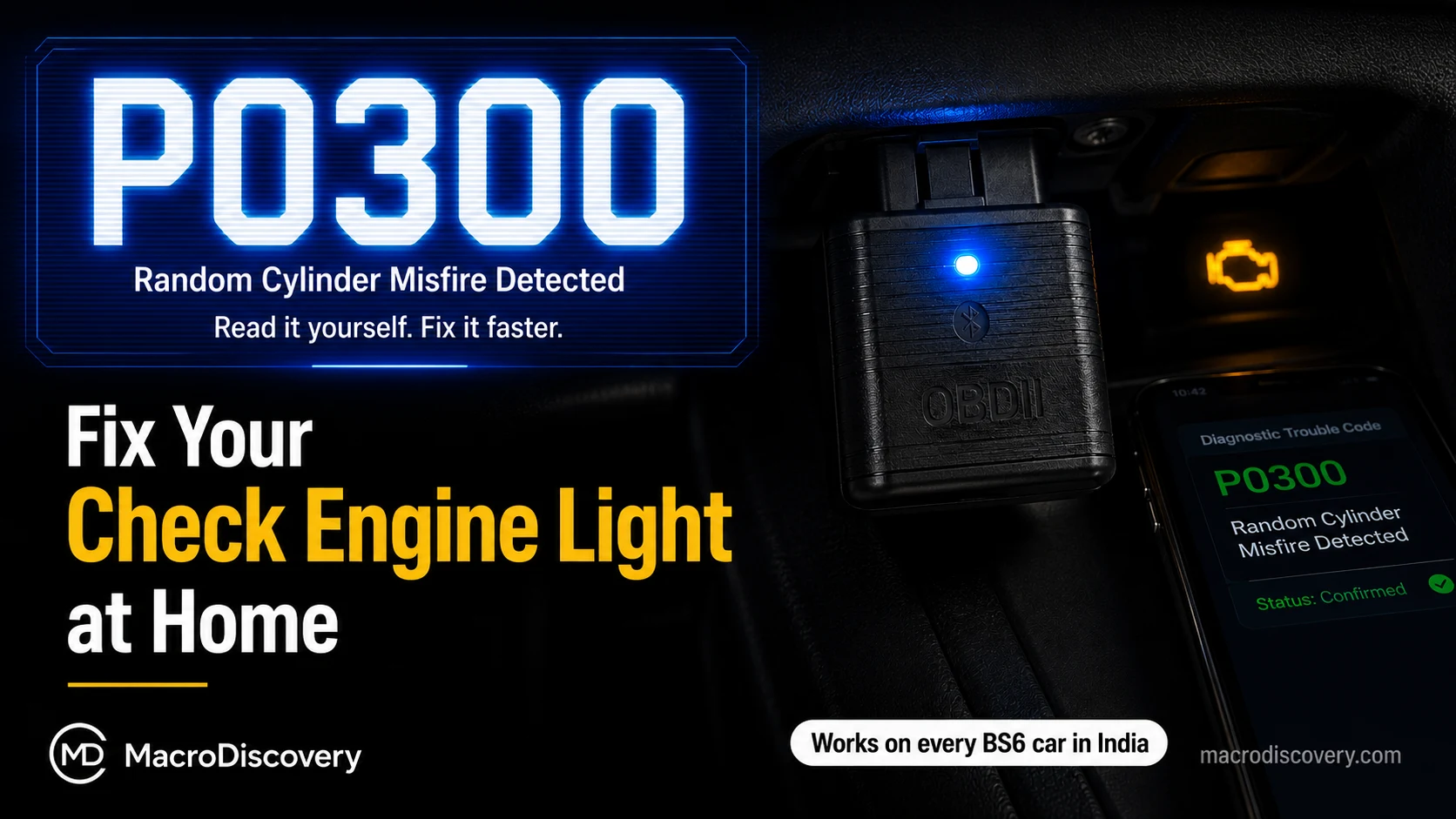
How do I find out what triggered my check engine light without going to a workshop?
Use a Bluetooth OBD2 scanner — available on Amazon India for ₹500–₹1,500. Plug it into the OBD2 port under your dashboard, pair it with a free app on your phone, and read the fault code. The code tells you exactly which system triggered the light. This gives you the information before you visit a workshop so you know what you are paying for.