10 Car Maintenance Mistakes Indian Drivers Make — And What They Actually Cost
Key Takeaways
- Skipping a timing belt replacement at the right interval can turn a ₹4,000–₹7,000 job into a ₹40,000–₹1,20,000 engine rebuild.
- Seven of the ten mistakes on this list cost nothing to prevent — they only require a habit change or reading your owner’s manual.
- India’s heat, dust, potholes, and variable fuel quality make every one of these mistakes more damaging here than in other countries.
Engine oil does three jobs — lubricate, cool, and clean. As it ages, it loses viscosity and turns into a sludge that blocks oil passages and starves moving parts of protection. In India’s conditions — extreme summer heat, stop-and-go city traffic, and dusty roads — oil degrades faster than in temperate countries. Most Indian petrol cars need an oil change every 5,000–7,500 km or every 6 months, whichever comes first. Drivers who push past this risk bearing wear, overheating, and eventually engine seizure — one of the most expensive mechanical failures possible. A well-maintained engine can last 2–3 lakh km. Neglect oil changes and serious trouble can arrive as early as 60,000–80,000 km.
Resting your foot on the clutch pedal while in traffic — even lightly — keeps the clutch partially disengaged. The friction plate stays in contact with the flywheel, generating heat and wearing down material that should last 80,000–1,00,000 km. In Indian city traffic, where drivers can sit in bumper-to-bumper conditions for an hour at a stretch, this habit can halve clutch life. The fix costs nothing: foot off the clutch unless you are actively changing gear or moving off. The repair, when the clutch eventually fails, is not cheap.
Under-inflated tyres are the leading cause of blowouts on Indian roads. Low pressure increases the contact patch, generates heat in the tyre walls, and dramatically raises the risk of failure — especially at highway speeds. It also causes edge wear, which means your tyres wear unevenly and die far sooner than they should. Check tyre pressure every two weeks, ideally when cold. The correct pressure for your car is on a sticker on the driver-side door jamb — not on the tyre sidewall. A nitrogen refill costs ₹50–₹100 per tyre and maintains pressure more consistently than regular air across temperature changes.
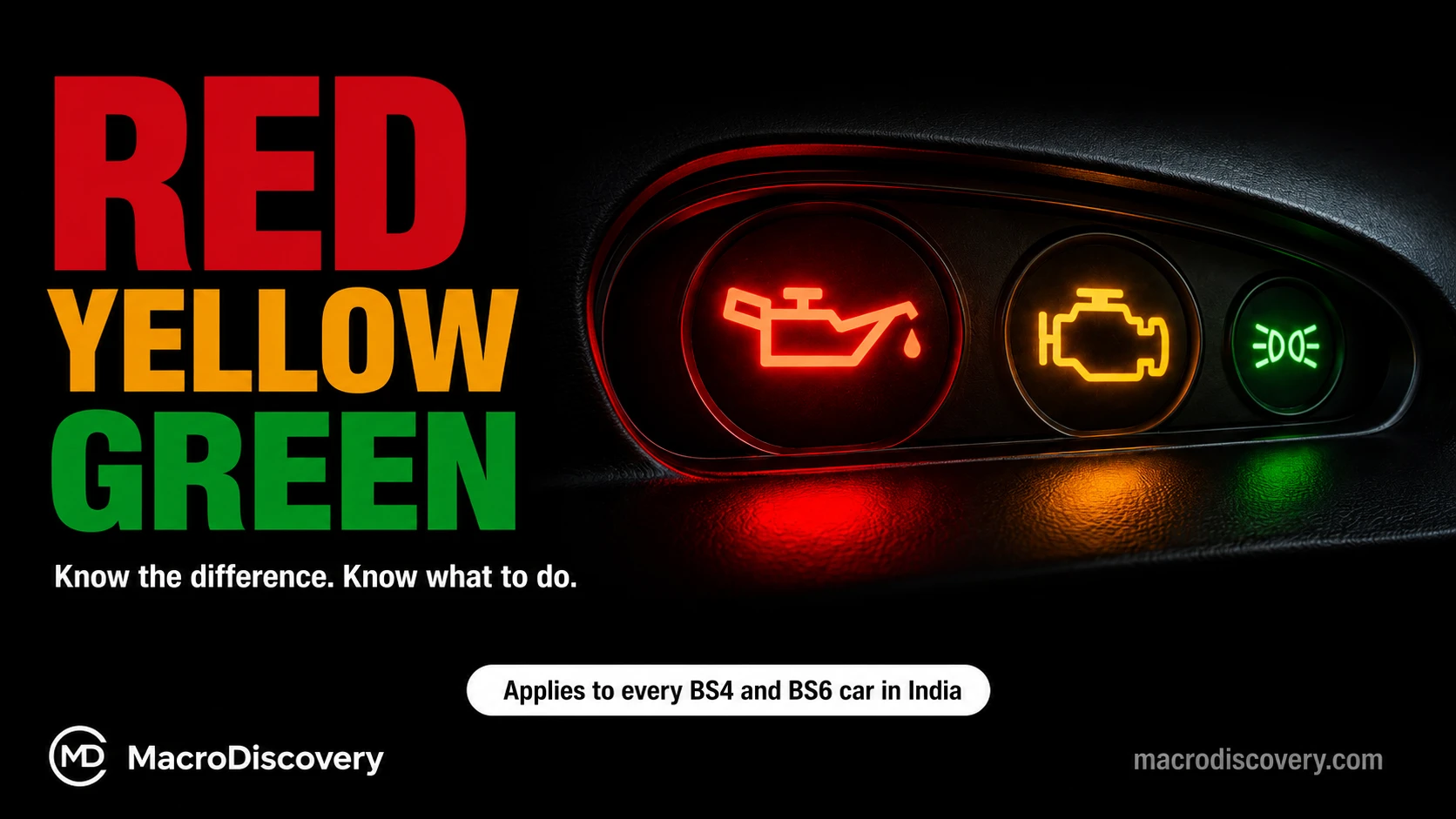
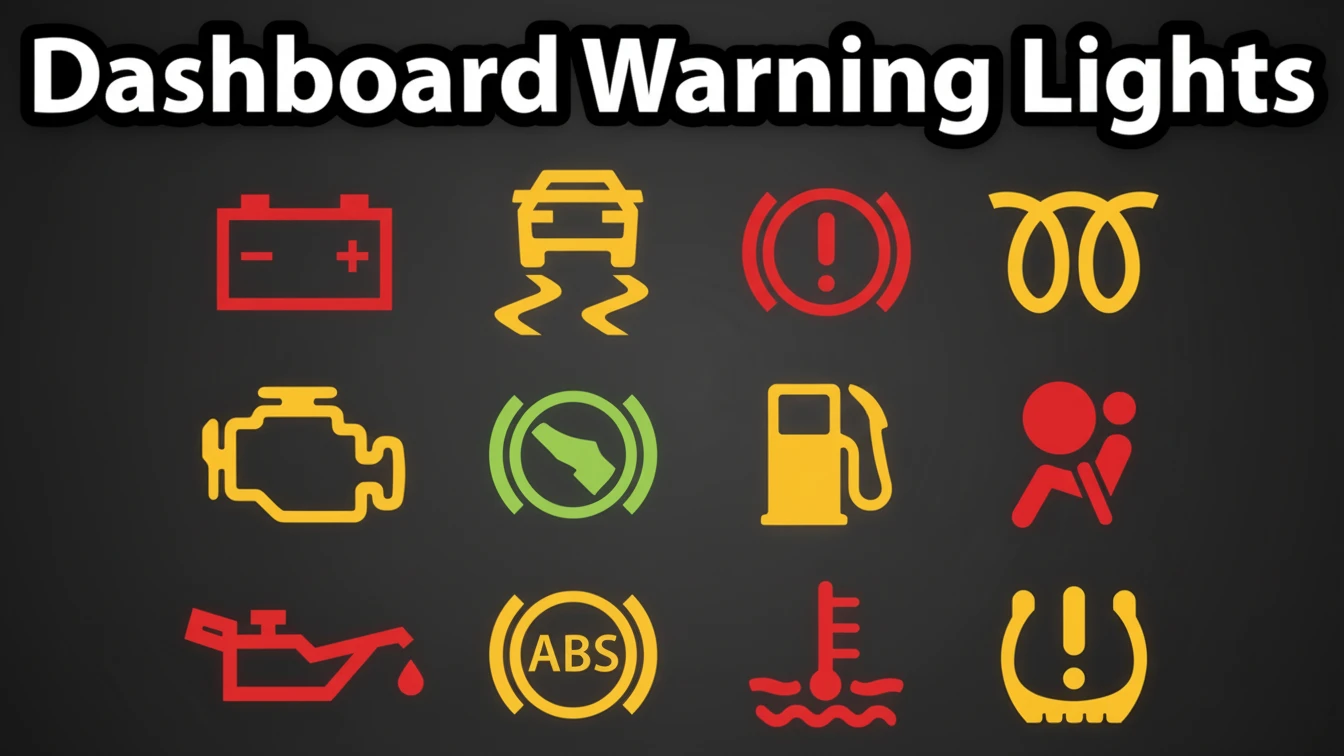
A warning light is not a suggestion. It is a real-time signal from a sensor that has detected something outside normal operating parameters. The oil pressure warning, in particular, demands an immediate stop — continuing to drive with low oil pressure can destroy an engine within minutes. The check engine light, if flashing rather than steady, signals an active misfire and requires pulling over immediately. Many Indian drivers treat warning lights as background noise, driving for days or weeks with them on. By the time they visit a workshop, what could have been a ₹500 sensor fix has become a ₹50,000 repair bill.
A basic service every 5,000–7,500 km is not just an oil change — it is a multi-point inspection that catches problems before they compound. Worn brake pads get spotted before they damage discs. A fraying drive belt gets flagged before it snaps. A low coolant level gets corrected before the engine overheats. Drivers who skip services to save money end up paying far more when multiple deferred issues hit at once — or when a small issue becomes a major repair. Sticking to the service schedule is the single most cost-effective maintenance decision an Indian car owner can make.
Every car manufacturer specifies an exact oil viscosity grade for a reason — it is matched to the engine’s tolerances, operating temperatures, and design. Using a cheaper or incorrect grade might save ₹200 at the workshop, but thin oil cannot form the protective film thick enough for Indian summer temperatures, while oil that is too thick starves the engine of lubrication at cold start. Many local garages use whatever oil is in stock rather than checking the owner’s manual. Always confirm the grade before the mechanic starts — it is printed in your owner’s manual and usually on a sticker under the bonnet.
India’s roads are among the most pothole-dense in the world. A single hard pothole impact can knock your wheels out of alignment — and misaligned wheels silently destroy tyres. Fitting new tyres on a misaligned car wastes 30–50% of tyre life within 10,000 km. The car also pulls to one side, increases fuel consumption, and puts stress on steering components. Wheel alignment should be done every 10,000 km as routine, and immediately after any significant pothole impact. It takes 30 minutes and costs ₹500–₹1,500. Skipping it can cost you an entire set of tyres far ahead of schedule.
Brake pads are a consumable — they are designed to wear down and be replaced. The problem starts when drivers ignore the squealing sound that worn pads make and keep driving. Once the pad material is gone, metal grinds directly against the brake disc. Discs are expensive. A pad replacement costs ₹300–₹1,200 and takes an hour. Letting it go until the disc is scored adds an estimated ₹3,000–₹6,000 on top of that — and in the worst case, compromised braking on Indian roads where stopping distances already matter enormously. If your brakes squeal on normal application, get them checked immediately.
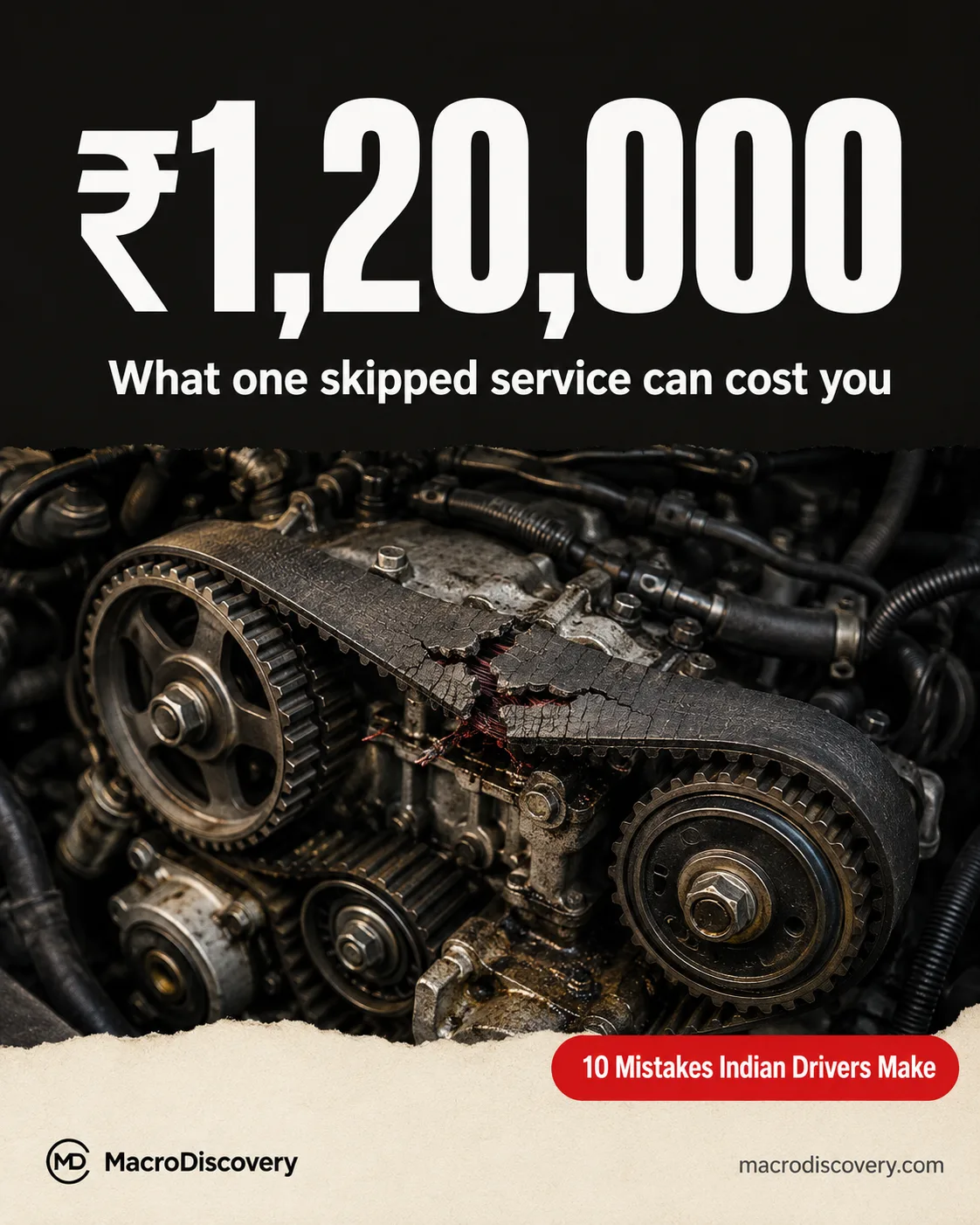
This is the most expensive mistake on the list — and the most avoidable. Most Indian car manufacturers specify timing belt replacement at 60,000–90,000 km or 5 years, whichever comes first. The timing belt synchronises the engine’s internal components. When it snaps on an interference engine, pistons collide with open valves and the resulting damage is catastrophic — the kind that can write off an otherwise healthy engine. A belt replacement including the water pump costs ₹4,000–₹7,000 at an independent garage. The repair bill after a snap starts at ₹40,000 and can reach ₹1,20,000. Check your service book. If you do not know when your timing belt was last changed, assume it is due.
Fuel adulteration remains a real problem in India, especially outside metro cities and at poorly maintained highway pumps. Contaminated petrol causes injector deposits, sensor failures, and engine knocking. For diesel car owners, adulterated fuel is even more dangerous — modern BS6 diesel engines have high-pressure injection systems with extremely fine tolerances. One tank of bad diesel can clog injectors, damage the turbocharger, or block the Diesel Particulate Filter. The rule of thumb: choose COCO (company-owned, company-operated) outlets, or busy pumps with high turnover and digital receipts. It costs nothing to be selective about where you fill up.
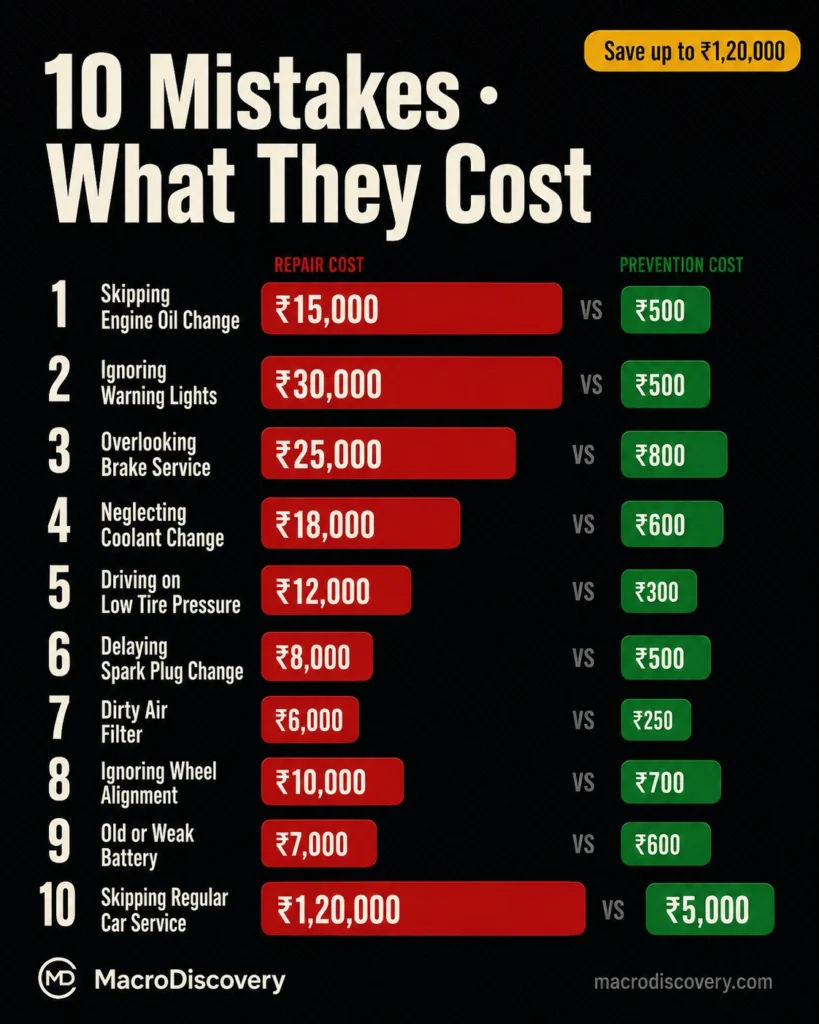
All 10 Mistakes at a Glance
| # | Mistake | If You Ignore It | Prevention Cost |
|---|---|---|---|
| 1 | Skipping oil changes | ₹1.5L–₹4L | ₹500–₹2,800 |
| 2 | Riding the clutch | ₹8,000–₹18,000 | Free |
| 3 | Neglecting tyre pressure | ₹16,000–₹28,000 | ₹50–₹100/tyre |
| 4 | Ignoring warning lights | ₹5,000–₹1.5L+ | Free |
| 5 | Delaying periodic service | ₹12,000–₹20,000 | ₹2,500–₹4,500 |
| 6 | Wrong engine oil grade | ₹1.5L–₹4L | ₹0 extra |
| 7 | Skipping alignment after potholes | ₹16,000–₹28,000 | ₹500–₹1,500 |
| 8 | Worn brake pads | ₹3,300–₹7,200 | ₹300–₹1,200 |
| 9 | Skipping timing belt | ₹40,000–₹1,20,000 | ₹4,000–₹7,000 |
| 10 | Bad fuel pump choice | ₹12,000–₹1.5L+ | Free |
How often should I service my car in India?
A basic service every 5,000–7,500 km or every 6 months, whichever comes first. In severe conditions — heavy city traffic, dusty roads, extreme heat — lean toward the shorter interval. Always follow your manufacturer’s service schedule as the baseline.
How do I know if my timing belt needs replacing?
Check your service book for the last replacement date and mileage. Most Indian manufacturers specify replacement at 60,000–90,000 km or 5 years, whichever comes first. If you bought a used car and cannot confirm the last replacement, treat it as due and budget ₹4,000–₹7,000 for it within your first 6 months of ownership.
Which fuel pumps are safe to use in India?
Choose COCO (company-owned, company-operated) outlets from major OMCs like Indian Oil, HPCL, and BPCL. These are less prone to adulteration than dealer-owned outlets. Also prefer high-traffic pumps with digital receipts and modern-looking dispensing equipment, especially on highways.
Is diesel car maintenance really more expensive?
Yes — diesel cars cost 20–30% more to service than equivalent petrol cars in India, because they use more oil, have additional filters, and BS6 diesel engines have sensitive high-pressure injection systems. The DPF and injectors are the most expensive components to repair when neglected.
Can I avoid these mistakes on a tight budget?
Most of them, yes. Five of the ten mistakes on this list cost nothing to prevent — they only require awareness and habit changes. The remaining five have low prevention costs that are a fraction of the repair bills they prevent. The timing belt is the single most important investment: ₹4,000–₹7,000 spent at the right interval can save you ₹1,20,000.