The Economics of Education Debt
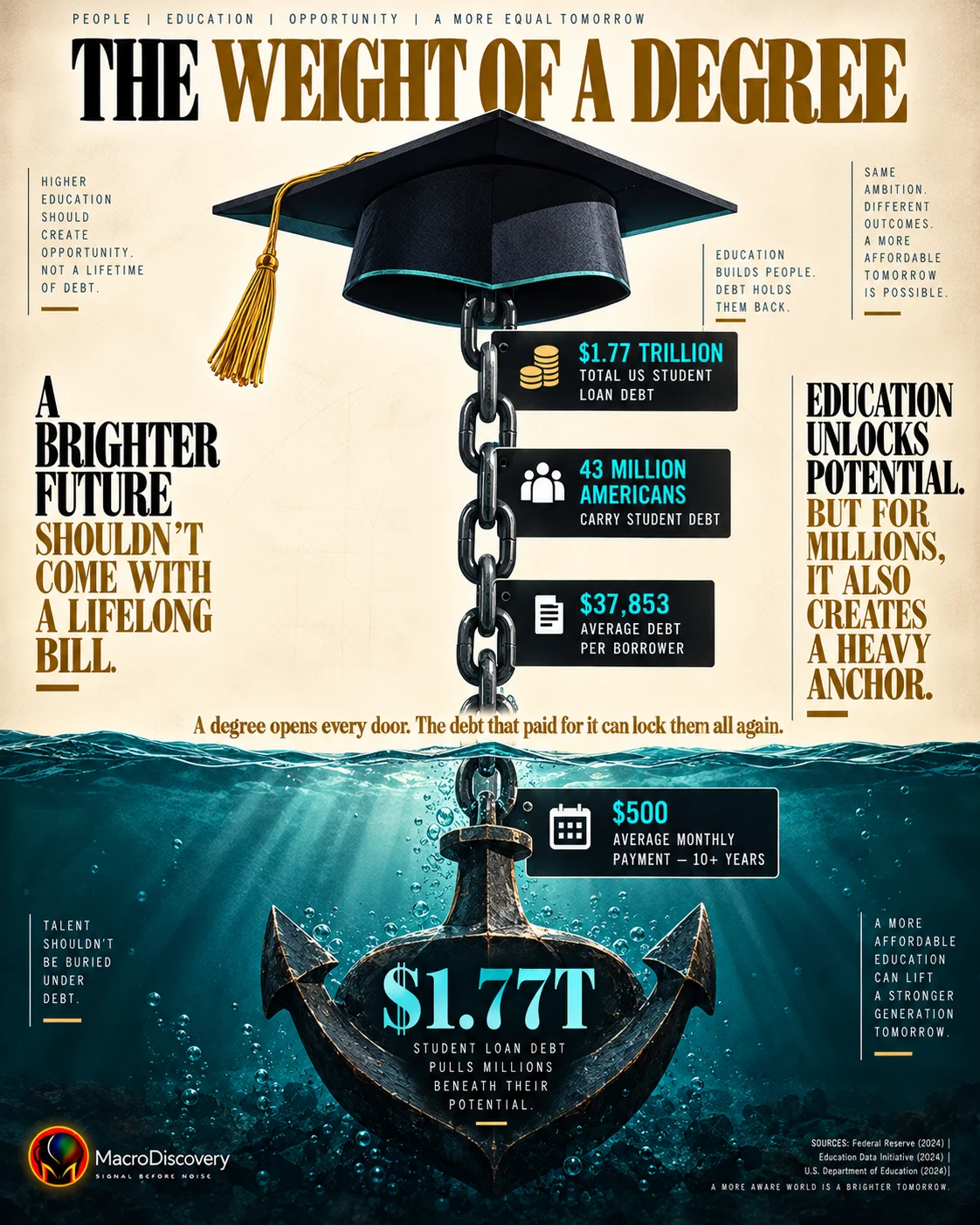
42.6 million Americans sit on $1.72 trillion in federal student loans. The $1.77 trillion line is last year’s postcard.
Private loans add about $139 billion. The New York Fed’s household tape is a third book. Default is no longer a paused statistic. Nine million federal borrowers are already there.
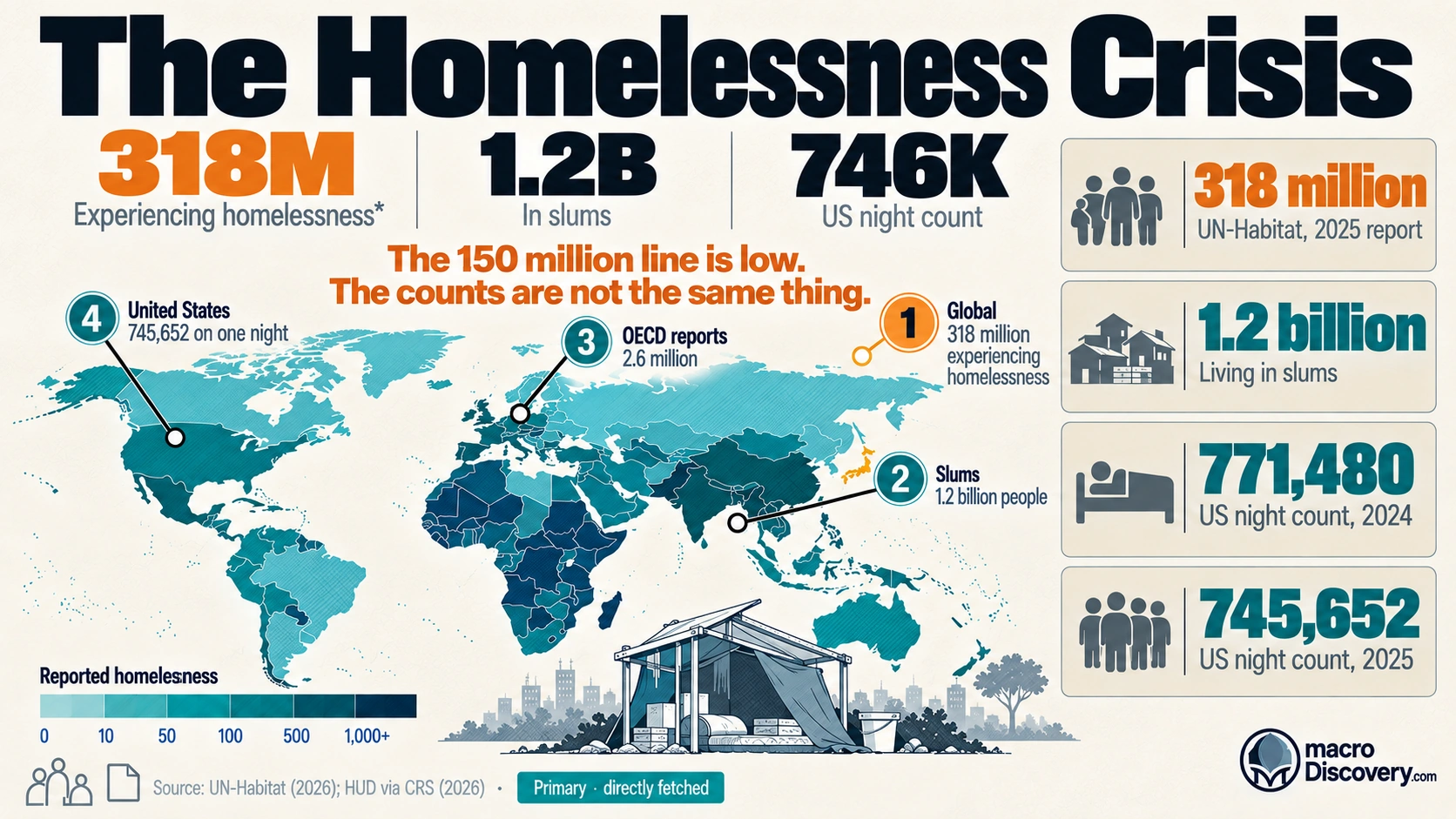
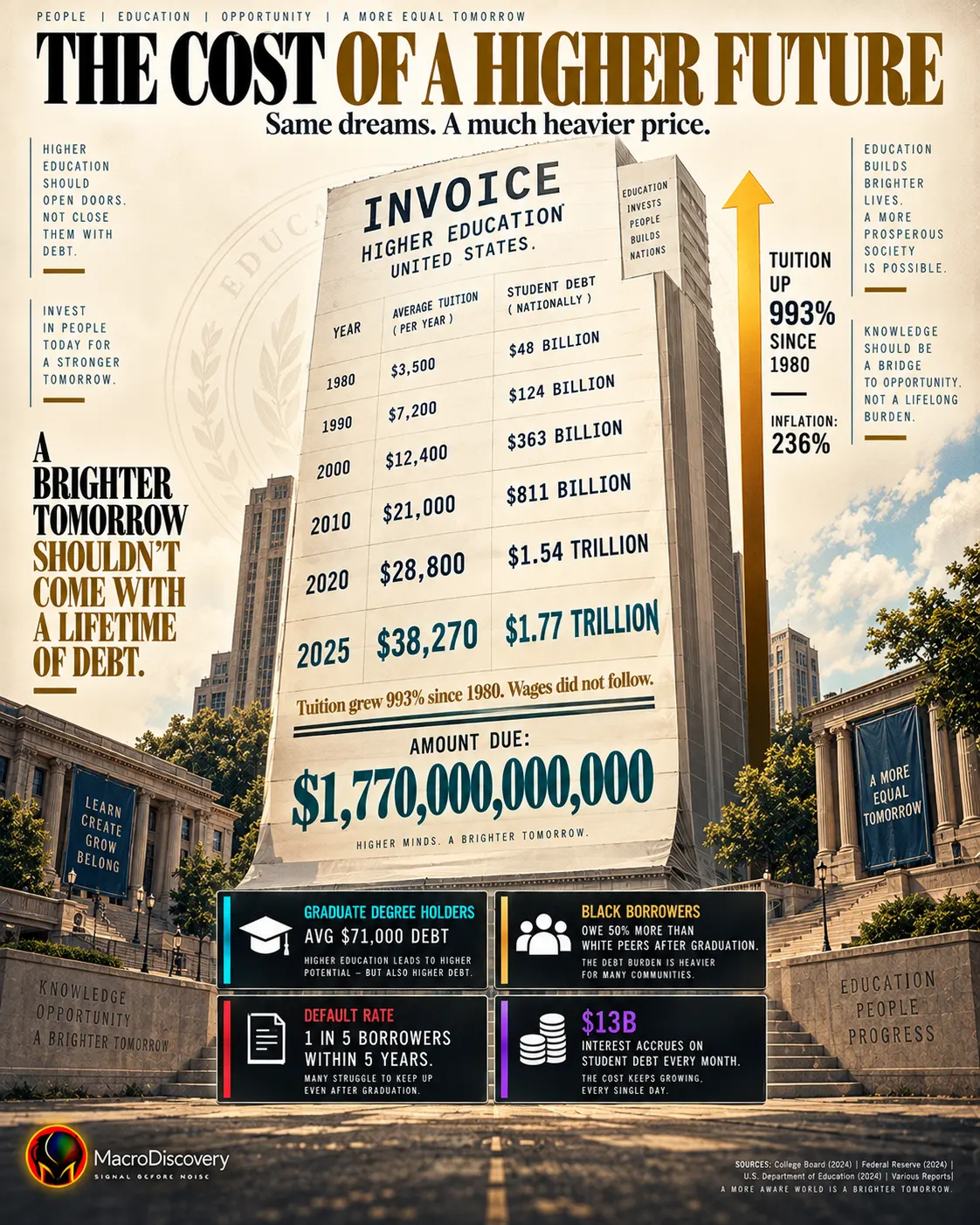
The number that travels is $1.77 trillion and 43 million borrowers. That was a fair snapshot a year or two ago. It is not the March 2026 file.
Federal Student Aid’s portfolio tables through 31 March 2026 show 42.6 million unduplicated recipients and $1.724 trillion in federal loans — Direct, FFEL and Perkins. Call the headline $1.72 trillion and 43 million only if you round. Do not treat $1.77 trillion as current.
Private student loans sit on another shelf: lenders’ industry tally puts them near $139 billion at the same quarter, about 7% of a combined $1.86 trillion market. The New York Fed’s household-credit panel, which reads credit reports, showed student balances around $1.65–1.66 trillion in early 2026. Three books. Three answers. Stack them and you invent a fourth.
Direct Loans are the country. Everything else is a remnant.
- —Direct Loans$1,563B
- —FFEL$158B
- —Perkins$3B
- —All federal$1,724B
- —Private (separate book)~$139B
Recipient counts overlap across loan types. The 42.6 million figure is the unduplicated federal total. Private is not inside the federal bar.
Most borrowers owe little. Most of the money sits with a few.
About half of federal recipients owe under $20,000. They hold only about an eighth of the dollars. The other end: fewer than one in ten borrowers owe $100,000 or more — and they carry more than two-fifths of the balance. The “average student loan” is a myth that hides graduate and professional debt.
FSA, March 2026
Not always the same as “unique people with a private loan too.”
$220B · ~13% of ED-managed book
First wave after the payment pause. Default is a status, not a morality play.
~12% of the dollars
The crowd is not where the pile is.
~42% of the dollars
Graduate and professional programs do the heavy lifting.
$1.77 trillion is a memory. $1.72 trillion is the federal file. $1.86 trillion is the store if you add private. $1.65 trillion is what the credit bureau sees. Pick one shelf.Macro Discovery reading of FSA, industry private-loan tallies, and the NY Fed panel
Forgiveness debates a total. Collections chase a slice.
The political argument uses the biggest round number in the room. The operational story is narrower: after the pandemic pause, accounts could fall 360 days late again. FSA’s June 2026 note put about nine million borrowers and $220 billion in default on the federally managed book. That is the part that turns into wage garnishment and tax offset. It is not the whole $1.72 trillion.
The distribution is the other correction. Canceling $10,000 a head would touch most names and miss most dollars. The expensive balances are graduate. Parent PLUS is its own political orphan — $118 billion, 3.5 million recipients — sitting inside the federal total and almost never in the slogan.
Editorial reading of FSA FY2026 Q2 portfolio tables and the 23 June 2026 Data Center note. Those offices did not write this box.If you remember two things
42.6 million recipients. $1.72 trillion.
Direct Loans $1.56T. The $1.77T headline is retired. Private ~$139B lives next door.
About nine million federal borrowers in default
$220 billion. Roughly 13% of the Education Department’s managed book. NY Fed 90+ day delinquency on its tape: about 10–11% of balances.
Short answers
One agency file. Two neighboring books.
- Federal: FSA Data Center portfolio, quarter ended 31 March 2026 — $1,723.9 billion; 42.6 million unduplicated recipients; Direct $1,562.9B / 38.5M; FFEL $158.3B; Perkins $2.7B.
- Default: FSA 23 June 2026 note — ~9 million borrowers, $220 billion, >13% of the $1.64 trillion federally managed book.
- Private: industry compilation ~$138.8 billion at the same quarter. Combined market ~$1.86 trillion.
- Household tape: NY Fed Q1/Q2 2026 student balances ~$1.65–1.66 trillion; 90+ day delinquency about 10.3–10.6% of balances.
- Distribution: published FSA-style buckets — majority of borrowers under $20k, minority of dollars; $100k+ borrowers hold ~42% of balances.