Visualized: How
Wealth Is Inherited
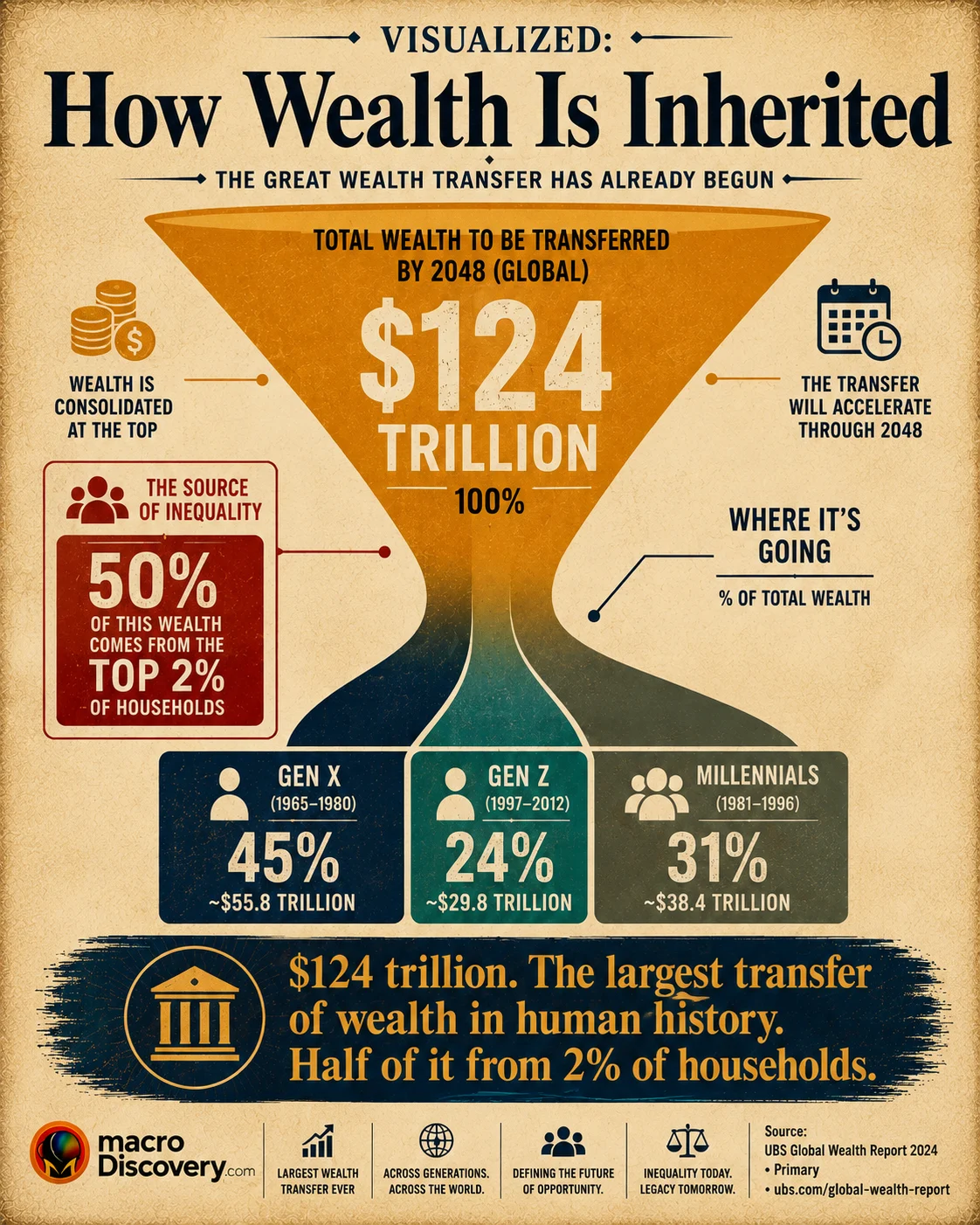
$124 trillion will transfer from older generations to heirs and charities by 2048 — the largest movement of wealth in human history. More than half comes from just 2% of households. In 2025 alone, 91 heirs inherited $297.8 billion — a single-year record. Here is how it works, who gets it, and what the numbers reveal about the world we are building.
Projected wealth transfers through 2048 by receiving generation, source concentration, and destination. Bars scaled to Millennials’ $46T (largest generational share). Source: Cerulli Associates — “The Cerulli Report: U.S. High-Net-Worth and Ultra-High-Net-Worth Markets 2024” (primary · cerulli.com · directly fetched · December 5, 2024). UBS Billionaire Ambitions Report 2025 (primary).
The Great Wealth Transfer is not just a big number. It is the visible result of decades of wealth concentration — and it is accelerating. Source: Cerulli Associates (primary) · UBS Billionaire Ambitions 2025 (primary) · OECD.
The word “inheritance” conjures images of old family silver and a modest house left to children. The scale of what is actually happening is almost impossible to comprehend. $124 trillion. In the United States alone. Over the next 25 years. To put it in context: that is roughly four times the size of the entire US economy. This is the event Cerulli Associates calls the Great Wealth Transfer — and it is already underway.
“The majority of the $124 trillion being transferred will come from just 2% of households. More than half of the greatest wealth event in human history benefits people who are already at the top.”
Who Is Most Likely to Inherit? The Gap Is Wider Than Most People Know
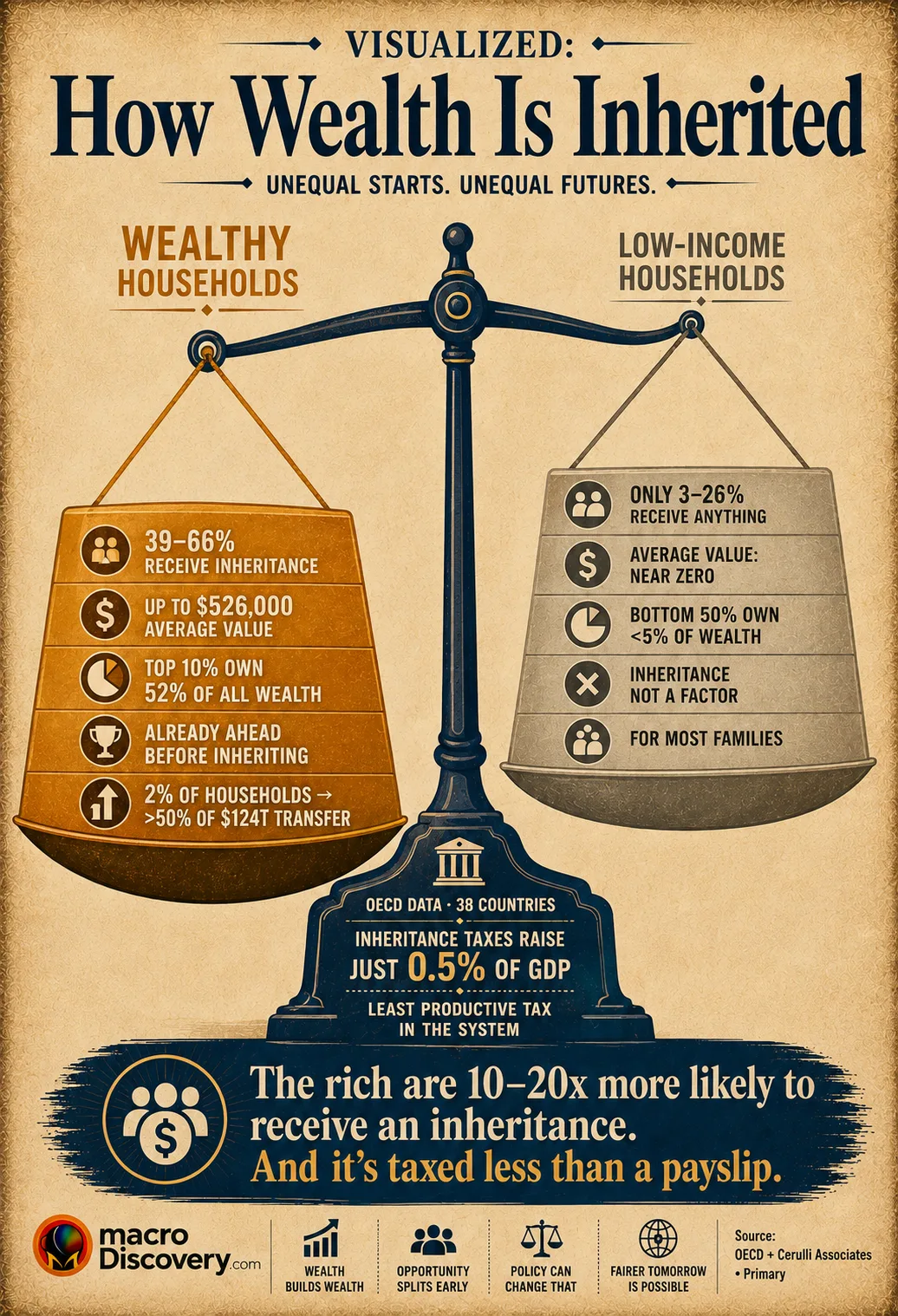
OECD data shows the top 10% of households already own 52% of all household wealth. They are also the most likely to receive inheritances. Among wealthy households, 39% to 66% have received an inheritance or gift. Among the poorest 20%, only 3% to 26% have. The average inheritance received by the wealthiest reaches up to $526,000. For most low-income households, it is zero. Inheritance does not just transfer wealth — it amplifies the gap that already exists.
The Tax Paradox — Inheritance Is Taxed Less Than Work
In most wealthy countries, you pay more tax on the money you earn at work than on the money you receive when a parent dies. OECD inheritance taxes raise only about 0.5% of GDP across member countries — a fraction of what income taxes collect. Only 24 of 38 OECD countries levy any inheritance tax at all. Australia, Canada, New Zealand, and Sweden abolished theirs entirely. The wealthiest estates use trusts, family business exemptions, and stepped-up cost basis rules to reduce their effective tax rates further. The result: inherited wealth flows mostly untaxed, compounding advantage across generations.