humanoid robots factories,humanoid robot jobs,will robots replace jobs,
The Rise of Humanoid Robots
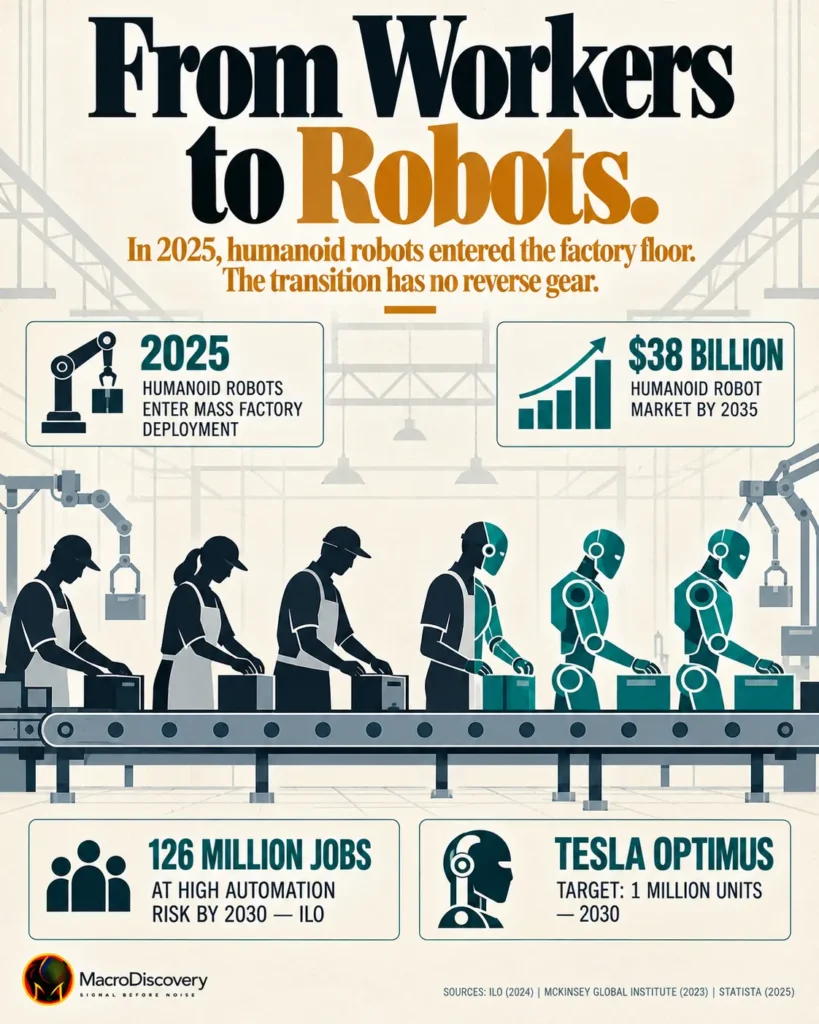
Humanoid robots entered a few factories in 2025. Millions of jobs replaced is a forecast, not a current count.
Documented work so far is measured in hours and parts, not in millions of displaced workers.
Three numbers
- 13,000–20,000 — humanoid units sold worldwide in 2025. Source: Omdia/IDC and Bank of America Institute.
- 1,250 — operating hours logged by Figure 02 at BMW Spartanburg. Source: Figure AI; BMW has not disputed the plant result.
- 75,000 — Goldman Sachs baseline shipment forecast for 2026. Source: Goldman Sachs Research, 2026.
What the data shows
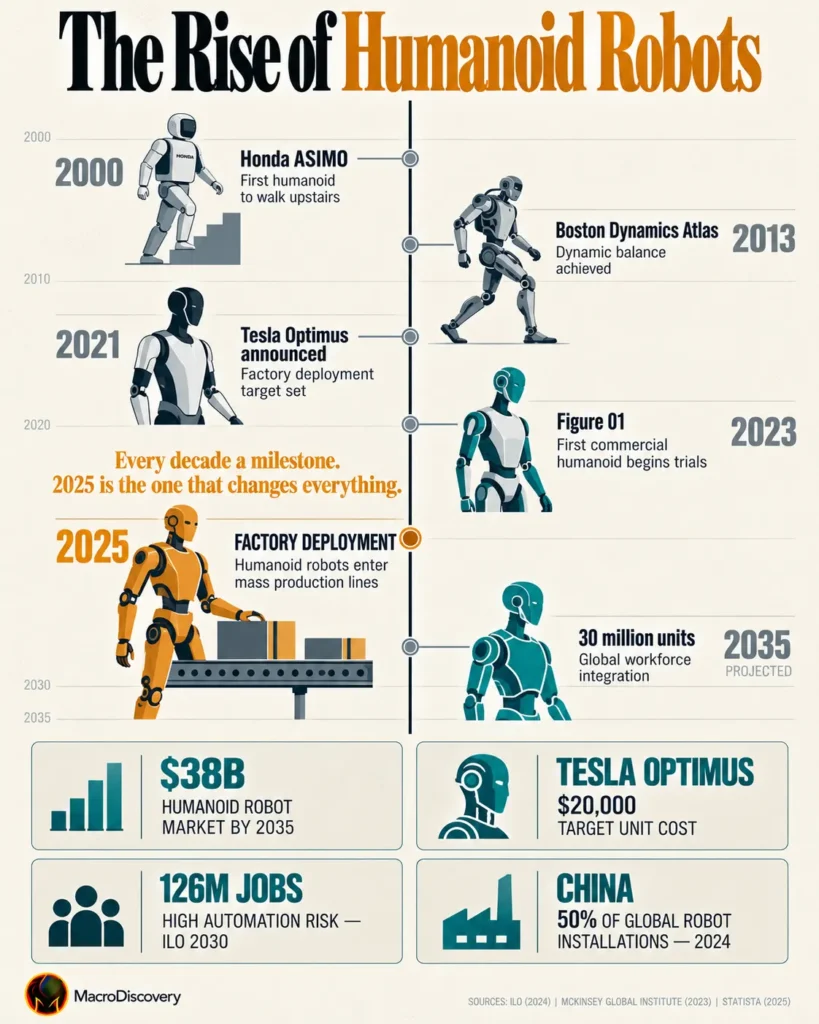
A common claim is that humanoid robots entered factories in 2025 and that millions of jobs are next. The fact is that a few paid pilots ran real shifts. Figure 02 loaded more than 90,000 sheet-metal parts over about 1,250 hours at BMW’s Spartanburg plant and supported production of more than 30,000 X3 vehicles, according to Figure. BMW has confirmed the plant trial. That is one line in one body shop.
About 13,000 to 20,000 humanoid units were sold in 2025, according to Omdia, IDC, and Bank of America. Roughly 90 percent of those sales were in China. Many went to labs and demos. Agility Digit has the longest commercial logistics run, starting at a GXO site in June 2024. Tesla has not published an audited Optimus production count. Bank forecasts for 2026 run from about 50,000 to 90,000 shipments. That is still not millions of jobs.
| Year | What happened |
|---|---|
| 2024 | Agility Digit starts paid tote work at GXO, Georgia. |
| 2025 | Figure 02 runs ~10 months at BMW Spartanburg. Global sales ~13k–20k units. |
| Late 2025 | BMW tests Hexagon AEON at Plant Leipzig. |
| 2026 | More pilots. Goldman baseline: 75,000 shipments. Job losses not counted. |
Dates from company and plant statements. Shipment ranges from analyst houses, not a census.
How it was measured
A humanoid here means a robot with a torso and arms built to work in spaces designed for people. Hours, parts, and vehicles come from Figure and from BMW’s account of the Spartanburg trial. Shipment totals come from market researchers. They count units sold, not hours on a line.
This piece does not treat vendor capacity slides as installed robots. Tesla factory-conversion plans and million-unit targets are plans. Goldman’s 75,000 figure for 2026 and later 2030–2035 paths are forecasts. No labour ministry has published a humanoid job-loss series.
What it means
It is settled that humanoids can do narrow, repeated factory and warehouse tasks in a live plant. It remains uncertain how fast that scales, what the true unit cost will be, and whether jobs fall, shift, or stay scarce in plants that already cannot fill shifts. The 2025 record is pilots. The “millions of jobs” line belongs in the forecast column.
Common misreadings
- This figure is not millions of jobs already lost. No official series shows that.
- This does not include every industrial robot. Fixed arms already work most auto lines. Humanoids are a new, small subset.
- A change from 20,000 to 75,000 shipments in a forecast may be a model update, not robots on a floor.
Where the numbers come from
How we built this
- Dataset: Plant-side trial figures from BMW/Figure; 2025 shipment ranges from Omdia, IDC, and BofA; 2026 forecast from Goldman.
- Scope: Documented commercial or plant trials. Demo videos and unaudited unit claims excluded from the headline counts.
- Figures: Shipment ranges left as ranges. Hours and parts used as published by Figure and reported with BMW’s confirmation of the trial.