The Science of Exercise
What exercise does from the first minute to the first year.
Heart rate and blood flow rise in the first minute. One session can lower systolic blood pressure by about 5 mmHg for hours. Measurable VO2 max gains often appear in 6–8 weeks. A year of consistent training produces further structural changes.
Three numbers
- About 5 mmHg — average drop in systolic blood pressure after one exercise session, lasting hours. Source: meta-analysis of acute responses.
- 6–8 weeks — typical window for measurable VO2 max gains in previously sedentary adults with consistent training. Source: training studies.
- 24–48 hours — duration of the acute improvement in insulin sensitivity after a single session. Source: exercise physiology literature.
What the timeline shows
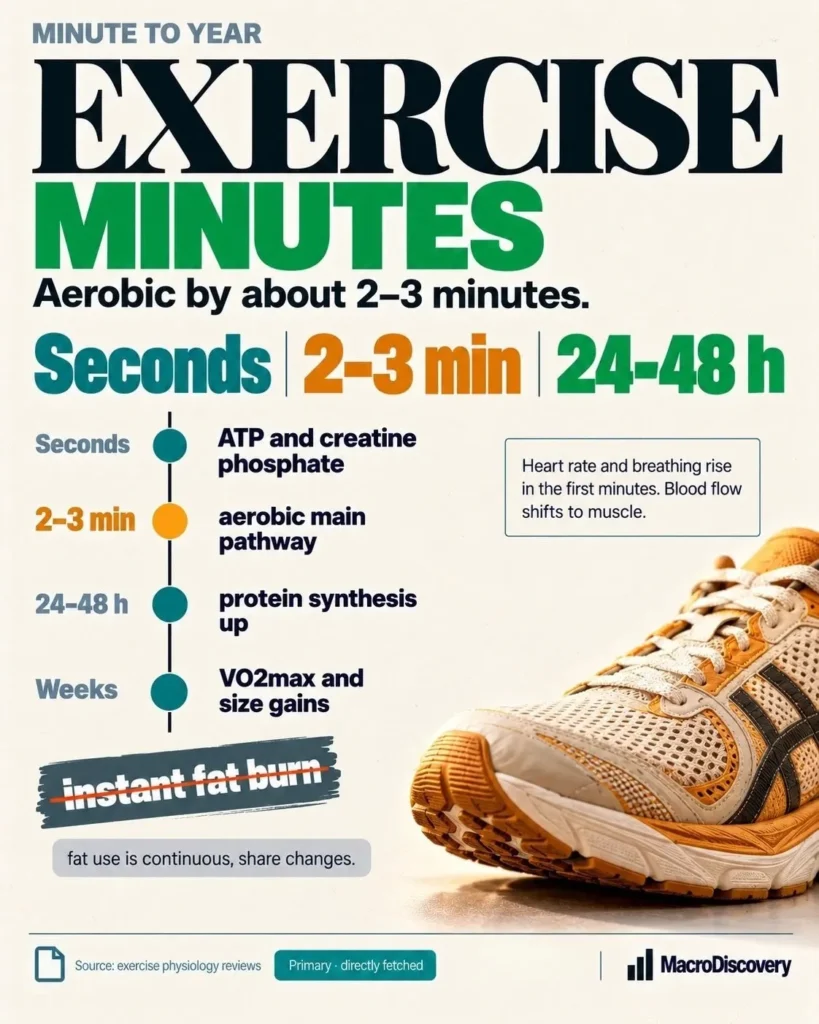
A common claim is that exercise takes months to do anything. The fact is that the body responds in the first minute. Heart rate and cardiac output rise within seconds as working muscles demand more oxygen. Blood vessels dilate. The brain releases neurotransmitters that increase alertness. These are acute responses. They are not permanent adaptations.
A single session produces measurable short-term effects. Meta-analyses show an average drop in systolic blood pressure of about 4.8 mmHg after one bout, with effects lasting hours. Insulin sensitivity improves for roughly 24–48 hours as muscles take up more glucose. These effects fade if the next session does not arrive. Consistency is required for lasting change.
Structural adaptations take longer. Plasma volume expands within the first one to two weeks. Early mitochondrial and capillary changes appear within weeks. Measurable VO2 max gains are commonly reported in 6–8 weeks of consistent training for previously sedentary people. One year of endurance training has produced average VO2 max increases around 16% in some studies of beginners. Cardiac remodeling continues over months. The largest early gains slow after the first several months. Genetics, starting fitness, and recovery all affect the size of the response.
Heart rate and cardiac output rise. Working-muscle vessels dilate. Alertness increases via neurotransmitter release.
Systolic pressure falls by about 5 mmHg on average for hours. Insulin sensitivity improves for roughly 24–48 hours.
Plasma volume expands. Early mitochondrial gene and protein changes begin. Resting heart rate may start to fall.
Capillary density and mitochondrial capacity rise. VO2 max improvements of several percent become measurable in many beginners.
Stroke volume and endurance continue to improve. Rate of gain slows. Strength and body-composition changes become visible with resistance training.
Left-ventricular mass and volume increase with consistent endurance training. Average VO2 max gains around 16% reported in some beginner studies.
Timelines are averages from training studies of previously sedentary or recreational adults. Individual responses vary with genetics, age, starting fitness, and recovery.
How the timelines were measured
Acute effects come from studies that measure blood pressure, glucose uptake, or heart rate before and after a single session. Training effects come from studies that retest VO2 max, mitochondrial markers, or cardiac structure after weeks to months of prescribed exercise. The one-year figure is from studies that followed previously sedentary adults through a structured endurance program. All figures are averages. Individual results differ.
What it means
It is settled that exercise changes the body from the first minute and that measurable fitness gains often appear within two months of consistent training. It is not settled that every person gains the same amount. Use about 5 mmHg for the acute systolic drop. Use 6–8 weeks for typical early VO2 max gains. Use 24–48 hours for the acute insulin effect. Do not treat one session as a permanent change.
Common misreadings
- One workout does not produce permanent fitness. Acute effects fade within hours to days.
- VO2 max does not usually rise measurably in the first week. Early changes are in blood volume and signaling.
- Gains slow after the first several months. Continued progress requires progressive training.
Where the numbers come from
How we built this
- Dataset: Acute-response meta-analyses, short-term training studies of mitochondrial and capillary markers, and one-year endurance training trials.
- Scope: Averages for previously sedentary or recreational adults. Individual variation and the need for recovery noted. Acute effects distinguished from chronic adaptations.
- Figures: About 5 mmHg is the acute systolic drop. 6–8 weeks is the typical window for early VO2 max gains. 24–48 hours is the acute insulin window. One session is treated as temporary.