Home AI Technology Gaming Future Automobile Geography Top 10 Trending How To Discover
---Advertisement---

Charted: The Rise of India

Macro Discovery
On: August 8, 2026 6:09 AM
Follow Us:
---Advertisement---
The Rise of India , The Rise of India — GDP, Growth & Digital Economy , India economy growth , Rise of India GDP , what is India’s GDP and world rank 2025 2026 economy size , when did India overtake Japan to become the 4th largest economy , how fast is India’s economy growing compared to China and US 2026 , what is UPI , what is UPI and why is it the world’s largest digital payment system , what is world’s largest digital payment system , what is India’s income per person GDP per capita 2026 , What is India’s GDP and what rank is it globally? , How fast is India’s economy growing? , What is UPI and why does it matter? , When will India become the world’s 3rd largest economy? , What is India’s income per person? ,
The Rise of India
The Rise of India
Charted: The Rise of India — MacroDiscovery
MacroDiscovery
Economics & Development · 5 min read · IMF WEO April 2025 + 2026 · Primary
IMF World Economic Outlook April 2025 + 2026 (Primary) · NSO India · NPCI / Government of India
India & Emerging Economies

Charted: The Rise
of India

In 2025, India overtook Japan to become the world’s 4th largest economy. It is the fastest-growing major economy on earth. Its digital payment system processes nearly half of all global real-time transactions. And yet India ranks 173rd in income per person. Here is what the data actually shows.

By MacroDiscovery
Sources: IMF WEO April 2025 + 2026 (primary) · NSO India · World Bank · NPCI
Latest data: FY 2025–26
#4
world’s largest economy · overtook Japan in 2025 · IMF primary
6.5%
GDP growth 2026 · fastest-growing major economy · IMF April 2026
241B
UPI transactions FY2025-26 · world’s largest real-time payment system
#173
India’s per capita income rank · $2,813 · IMF April 2026
Visualization 01 — Major Economy Growth Rates
India vs the World’s Biggest Economies

Real GDP growth rates, 2026 projections (calendar year). Bars scaled to India’s 6.5%. Source: IMF World Economic Outlook April 2026 (primary · imf.org).

India — fastest major economy
Strong growth (>4%)
Moderate growth (2–4%)
Slow growth (<2%)
🇮🇳 IndiaFastest major economy
World’s #4 economy by nominal GDP · #3 by PPP · overtook Japan in 2025 · all major forecasters — IMF, World Bank, OECD, ADB — confirm fastest status
6.5%
🇨🇳 ChinaStrong
World’s #2 economy · growth slowing as economy matures and property sector struggles · still strong but well below India’s pace
4.2%
🌍 Global averageModerate
IMF global growth forecast · India grows roughly twice the world average in 2026
~3.2%
🇺🇸 United StatesModerate
World’s #1 economy · growth slowing amid high interest rate legacy and fiscal uncertainty · 2.0% forecast for 2026 (IMF)
2.0%
🇩🇪 GermanySlow
World’s #3 economy · industrial recession + energy costs dragging growth · well below global average
~0.8%
🇯🇵 JapanOvertaken
Overtaken by India in 2025 · aging population + deflationary pressures have constrained growth for decades · now the world’s 5th largest economy
~1.1%
Note on growth figures: IMF reports India’s growth on both a fiscal year basis (April–March) and a calendar year basis, which produce different numbers. The 6.5% figure is the IMF’s calendar year 2026 projection. India’s fiscal year 2025–26 growth was revised to 7.6% by NSO/MoSPI in March 2026 — a different period and methodology. Both are correct; they measure different things.
Visualization 02 — Key Milestones
India’s Economic Ascent — The Moments That Mattered

From a closed, slow-growth economy in 1991 to the world’s 4th largest in 2025. Each step was a deliberate policy choice — or a technology leap. Source: IMF · World Bank · Government of India · NPCI.

1991
Opening
India Opens Its Economy — and Finds the IT Sector
India faced a balance-of-payments crisis in 1991 and was forced to liberalise. It removed import licences, cut tariffs, and welcomed foreign investment. What nobody expected was what happened next — India’s engineers plugged into the global internet and built one of the world’s largest IT industries.
Economic liberalisationIT sector emerges
2016
Digital
UPI Launches — A Real-Time Payment System Built for 1.4 Billion People
India launched UPI (Unified Payments Interface) in 2016 with just 2 crore transactions in the first full year. The system allowed anyone with a smartphone to send money instantly to anyone else. By FY2025-26, it processed 241.62 billion transactions worth $3.57 trillion — a 12,000-fold increase in a decade.
UPI: 2 crore transactions (2016)UPI: 241 billion (FY2025-26)
2023
Milestone
India Passes China as World’s Most Populous Country
India’s population passed China’s in 2023. This is not just a demographic fact — it is an economic one. India now has the world’s largest working-age population, providing a structural advantage for growth that China, Japan, and most of Europe have already lost to ageing.
World’s most populous countryLargest working-age population
2025
Top 4
India Overtakes Japan — Becomes the World’s 4th Largest Economy
India’s nominal GDP passed Japan’s for the first time in 2025. The IMF WEO April 2025 projected India at $4.187 trillion vs Japan at $4.186 trillion. NITI Aayog CEO confirmed it: “Only the US, China, and Germany are larger.” At PPP, India had already been #3 for years. In nominal terms, it joined that tier in 2025.
India #4 (nominal) — overtook JapanIndia #3 (PPP)
2028
Target
India Projected to Pass Germany — Become World’s 3rd Largest Economy
Morgan Stanley projects India will overtake Germany to become the world’s third-largest economy by 2028. At India’s current growth pace — roughly 3× Germany’s — that projection appears realistic. The question is not whether India will reach #3. It is what India does once it gets there.
India #3 projected by 2028Morgan Stanley projection

India’s rise is real. The data confirms it — from the IMF, the World Bank, and India’s own national statistics office. But it is a specific kind of rise. India is a very large economy with a very low income per person. Understanding that distinction is the key to understanding everything else about India’s story.

IMF WEO April 2025 · Official Milestone
#4
India overtook Japan in 2025 to become the world’s 4th largest economy. Only the US, China, and Germany are larger.
This was confirmed by the IMF’s April 2025 World Economic Outlook and officially acknowledged by India’s NITI Aayog CEO. By Purchasing Power Parity (PPP), India is already #3 globally — behind only the US and China. Morgan Stanley projects India passes Germany to become #3 in nominal terms by 2028.
Source: IMF World Economic Outlook April 2025 (primary) · NITI Aayog CEO B.V.R. Subrahmanyam official confirmation · Morgan Stanley (2028 projection)

“India is the world’s 4th largest economy — and 173rd in income per person. That gap is the story of where India is now, and where it has yet to go.”

UPI: India Built the World’s Largest Real-Time Payment System in 10 Years

In 2016, India had almost no digital payment infrastructure. Cash dominated. Banks were inaccessible for hundreds of millions. Then UPI launched — a free, instant, interoperable payment system built on government infrastructure. In FY2025-26, it processed 241.62 billion transactions worth $3.57 trillion. The IMF calls it the world’s largest real-time payment system. It processes roughly half of all global real-time transactions. It was built in ten years. Almost from nothing.

Why it matters: UPI shows what happens when a country builds open digital infrastructure — private innovation scales on top of it at extraordinary speed.
Digital Economy · FY 2025-26 Data
241B
UPI processed 241 billion transactions in FY2025-26 — a 12,000-fold increase since its launch a decade ago.
The value of those transactions reached $3.57 trillion. 705 banks are now live on the platform. India topped global digital wallet downloads in 2025 with over 440 million. The IMF officially recognises UPI as the world’s largest retail real-time payment system.
Source: Government of India / NPCI (via ANI, June 30, 2026) · IBEF citing NPCI data · IMF designation as world’s largest real-time payment system

The Manufacturing Shift — From “Made in China” to “Made in India”

In 2014, India imported 74% of its mobile phones. By 2025, 48% were made domestically. Apple shifted significant iPhone production to India. Twelve semiconductor projects have been approved. India is positioning itself as the key beneficiary of global supply chains diversifying away from China. This is not yet a manufacturing revolution. But it is a meaningful and accelerating shift.

Why it matters: manufacturing at scale is how countries move millions of people from informal subsistence work into formal wage employment — and that is what India needs most.
The Central Paradox · IMF April 2026
$2,813
India’s GDP per capita is $2,813 — ranking 173rd in the world out of ~190 countries.
India is a $4+ trillion economy with an income per person lower than most of Sub-Saharan Africa’s middle-income countries. The economy is large because the population is enormous — 1.477 billion people. Growing the overall economy is necessary but not sufficient. The harder task is raising income per person at scale.
Source: IMF World Economic Outlook April 2026 (primary) · Worldometer citing IMF April 2026

The Challenge: Growth That Reaches Everyone

India’s growth rate is real. Its digital revolution is real. Its demographic advantage is real. But India’s informal economy remains enormous — estimated at over a quarter of total economic activity. Hundreds of millions of workers are outside formal employment. Infrastructure gaps are significant. Agriculture employs roughly 40% of the workforce but generates a fraction of GDP. The question for the next decade is not whether India grows — it will. The question is who benefits.
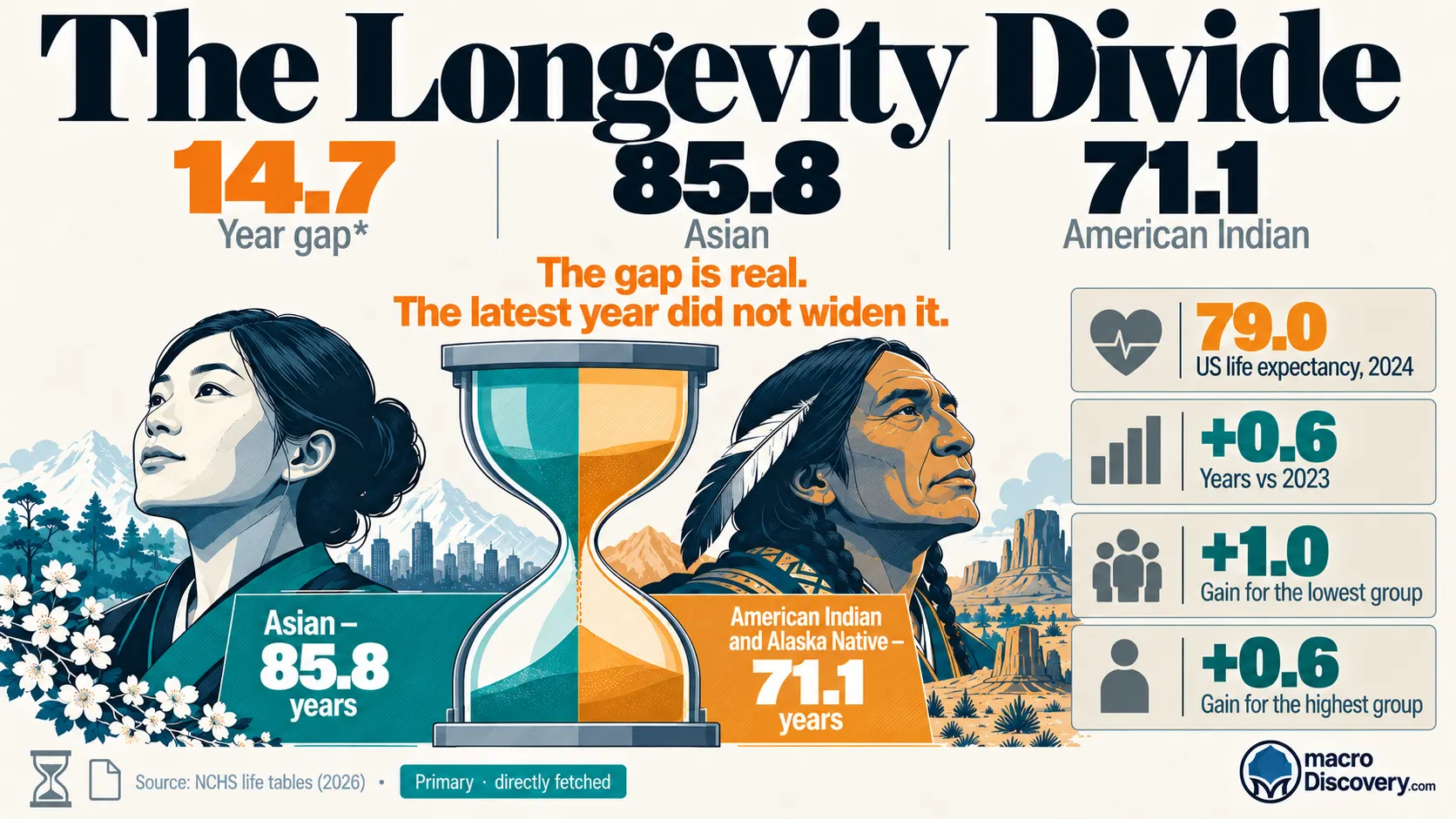
Why it matters: a country can be #3 in PPP terms and still have most of its people living on very little — India’s rise is impressive, and its next challenge is distribution.
Key Numbers at a Glance
India · GDP Rank
#4
World’s 4th largest economy by nominal GDP — overtook Japan in 2025. #3 by PPP. Projected #3 in nominal terms by 2028.
IMF WEO April 2025 (primary)
India · Growth Speed
6.5%
IMF growth projection for 2026 — fastest among all major economies. More than 3× Germany’s rate. More than 2× the US.
IMF World Economic Outlook April 2026
India · Digital Power
$3.57T
Value of UPI transactions in FY2025-26 alone. The world’s largest real-time payment system — built from zero in a decade.
NPCI / Government of India (ANI, June 2026)
India · Per Capita Reality
#173
India’s per capita income rank globally — $2,813 per person per year. The gap between India’s size and its income level is the defining challenge.
IMF World Economic Outlook April 2026
Frequently Asked Questions
What is India’s GDP and what rank is it globally?
India’s nominal GDP reached approximately $4.19 trillion in 2025, overtaking Japan to become the world’s 4th largest economy — behind only the US, China, and Germany. By Purchasing Power Parity (PPP), India is already 3rd globally. Source: IMF World Economic Outlook April 2025 (primary) · NITI Aayog CEO official confirmation.
How fast is India’s economy growing?
6.5% for 2026 (IMF calendar year projection) — making India the fastest-growing major economy in the world. For comparison: China 4.2%, US 2.0%, global average ~3.2%. India’s fiscal year 2025-26 growth was revised to 7.6% by NSO/MoSPI. Source: IMF World Economic Outlook April 2026 (primary).
What is UPI and why does it matter?
UPI (Unified Payments Interface) is India’s real-time digital payment system — recognised by the IMF as the world’s largest. In FY2025-26 it processed 241.62 billion transactions worth $3.57 trillion, a 12,000-fold increase since launch in 2016. Source: Government of India / NPCI via ANI (June 30, 2026) · IBEF.
When will India become the world’s 3rd largest economy?
By approximately 2028, according to Morgan Stanley projections. India needs to surpass Germany. At India’s current growth rate — roughly 3× Germany’s — this timeline appears realistic. India is already #3 globally by PPP. In nominal GDP terms, the projected crossing point is 2028. Source: Morgan Stanley · India Economy data (Statistics of the World).
What is India’s income per person?
$2,813 per person per year (2026), ranking India 173rd globally out of roughly 190 countries. Despite being the 4th largest economy overall, India’s enormous population of 1.477 billion means individual incomes remain low. This gap between total economic size and per-capita income is the defining challenge of India’s development. Source: IMF World Economic Outlook April 2026 (primary).
Sources
  • IMF World Economic Outlook April 2025 (primary · imf.org · India nominal GDP $4.187T surpasses Japan $4.186T · India becomes world’s 4th largest economy · growth projections 6.2% for 2025, 6.3% for 2026)
  • IMF World Economic Outlook April 2026 (primary · imf.org · India GDP per capita $2,813 · India rank #173 in per capita · calendar year growth 6.5% for 2026 · China 4.2% · US 2.0%)
  • IMF July 2025 WEO Update (primary · India growth revised to 6.4% for 2025 and 6.4% for 2026 on calendar year basis · “faster than anticipated” upward revision)
  • NSO / MoSPI India — First Advance Estimates FY2025-26 (primary · fiscal year real GDP growth 7.4% initial estimate, revised to 7.6% · note: fiscal year April-March, different from IMF calendar year projections)
  • NPCI / Government of India via ANI (June 30, 2026 · UPI FY2025-26: 24,162 crore (241.62 billion) transactions · value ₹314.23 lakh crore ($3.57 trillion) · IMF recognition as world’s largest real-time payment system · 705 banks live on platform March 2026)
  • Gulf News — “India overtakes Japan to become world’s fourth largest economy” (citing IMF April 2025 WEO + NITI Aayog CEO B.V.R. Subrahmanyam official press briefing confirmation)
  • Morgan Stanley (2028 #3 economy projection) · World Bank Global Economic Prospects (6.6% growth forecast) · Digital India / IBEF (48% mobile phones domestic 2025; 12 semiconductor projects approved)
Macro Discovery

Sukh Dhaliwal

Sukh Dhaliwal is the founder of Macro Discovery, an independent digital publication covering AI, technology, science, future trends, and global innovation through visual storytelling and data-driven analysis.

Join WhatsApp

Join Now

Join Facebook

Follow us

Leave a Comment