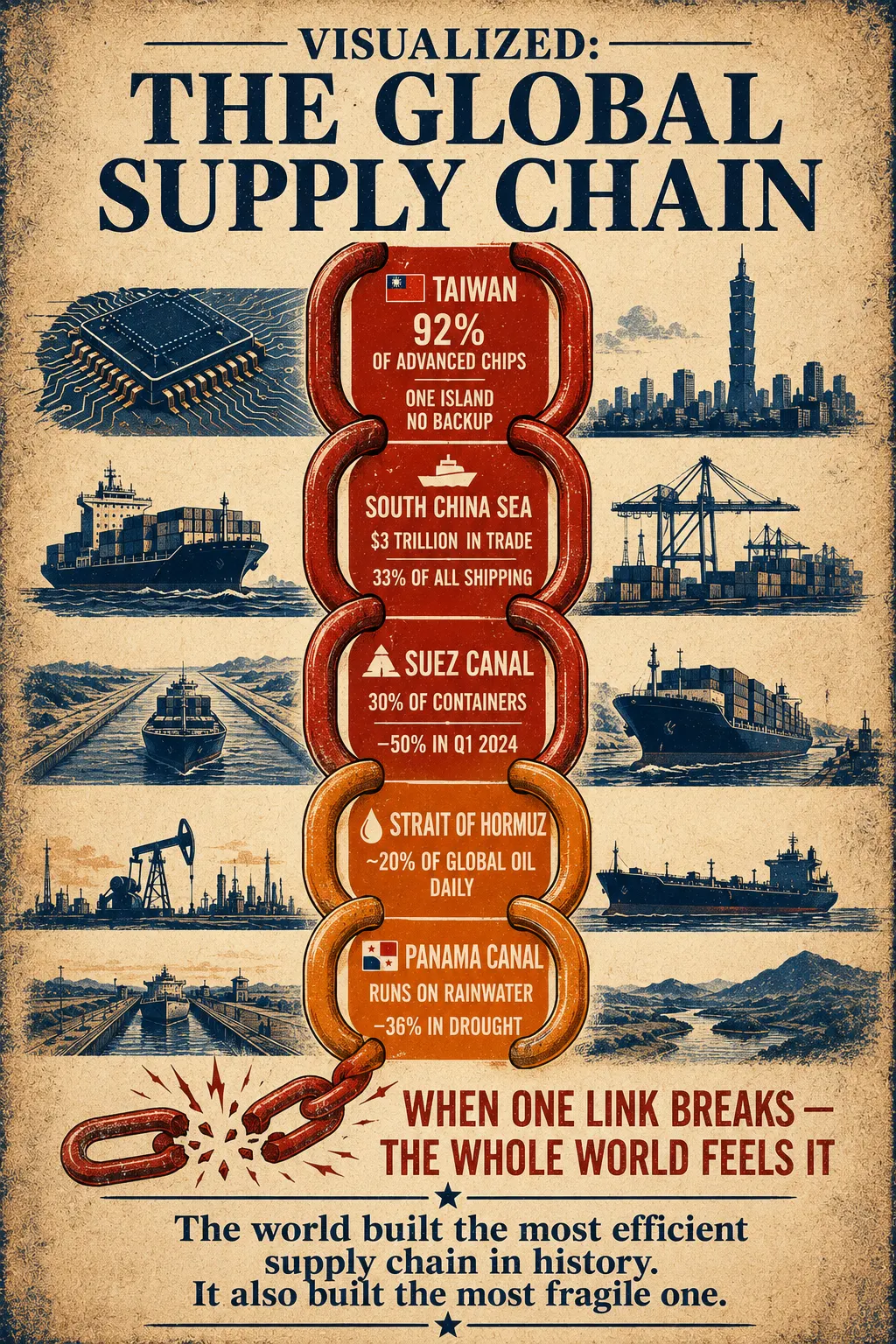
Visualized: The Global
Supply Chain
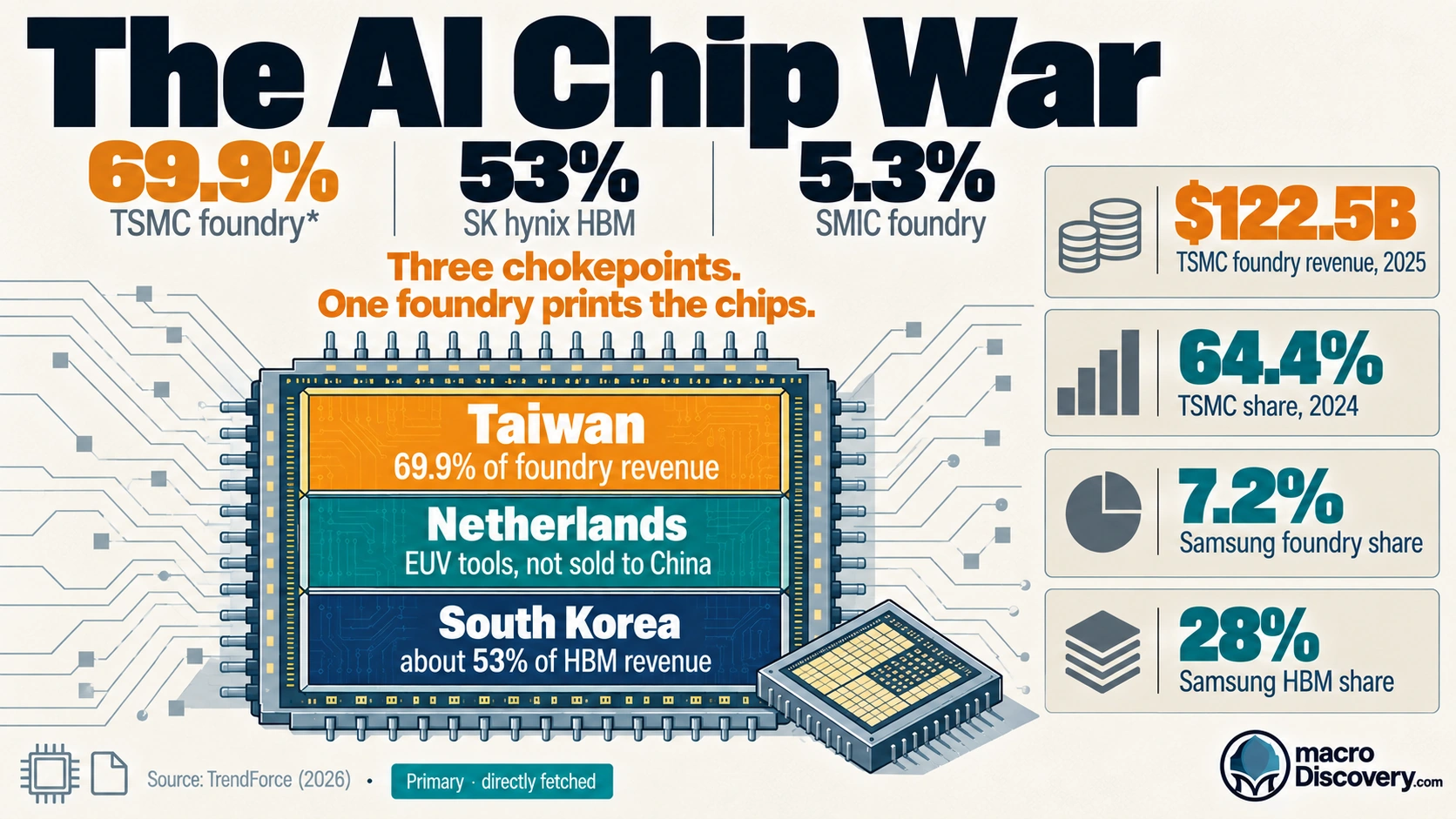
70% of all world trade runs through global value chains. Just 10 countries control 53.5% of what gets exported. One factory in Taiwan makes 64% of the world’s chips. When one link breaks — a canal, a war, a drought — the whole world feels it.
Each row shows how dependent the world is on a single location or route. When these break, global trade breaks with them. Source: WTO · UNCTAD · OECD · CSIS · US EIA (2024–2025).
From COVID to Houthi attacks to droughts — the supply chain has been hit again and again. Each time it gets a little harder to recover. Source: UNCTAD · WTO · World Bank GSCSI.
The global supply chain is the invisible infrastructure that connects every factory, port, and shop on earth. It works incredibly well — until it doesn’t. In 2024, just one conflict in the Red Sea disrupted over 20% of global container traffic. The world had built the most efficient supply chain in history. It had also built the most fragile one.
“The world built the most efficient supply chain in history. It also built the most fragile one.”
One Canal Closes — The Whole World Waits
The Suez Canal carries about 30% of all container shipping. When Houthi attacks disrupted it in early 2024, ships couldn’t go through. They rerouted around Africa instead. Every journey got 10 to 14 days longer. Freight rates tripled on Asia-Europe routes. Over 20% of global container traffic was disrupted by one conflict in one region. That is how fragile the system is.
The World Is Trying to Fix This — But It’s Harder Than It Looks
The US is investing to bring chip manufacturing home. TSMC is building a $65 billion plant in Arizona. With the CHIPS Act, the US chip share is projected to rise from 10% to 14% by 2032. But Taiwan’s advanced chip advantage won’t disappear soon. The gap in technology, skill, and scale is enormous. Reshoring takes decades, not years.
What Happens Next — The Supply Chain Is Being Rewired
The era of maximum efficiency is over. Companies now want resilience too. “Friendshoring” — moving supply chains to trusted allies — is growing fast. Vietnam, Mexico, and India are gaining manufacturing share. The WTO says globalisation is being rewired, not reversed. Trade is still happening. It’s just moving to different places, in more concentrated networks.