Home AI Technology Gaming Future Automobile Geography Top 10 Trending How To Discover
---Advertisement---

Mapped: The Countries With the Cleanest Air

Macro Discovery
On: July 23, 2026 7:04 AM
Follow Us:
---Advertisement---
The Countries With the Cleanest Air , Which country has the cleanest air in the world? , Which country has the worst air quality in the world? , How many people die from air pollution each year? , What percentage of cities meet WHO air quality standards? , Why does Africa have so little air quality data? ,
The Countries With the Cleanest Air
Mapped: The Countries With the Cleanest Air — MacroDiscovery
MacroDiscovery
Environment · 5 min read · IQAir 2024 Primary
Environmental Data — IQAir World Air Quality Report 2024
Air Quality & Global Health

Mapped: The Countries With
the Cleanest Air

Only 7 countries passed the WHO air quality test in 2024. Chad’s air is 18× more toxic than the safe limit. Every year, dirty air kills 7 million people. Here’s who has clean air — and exactly how they got it.

By MacroDiscovery
Sources: IQAir · WHO · Medical Device Network
Data: 138 countries · 40,000+ stations
7
Countries with clean air in 2024
91.8
Chad μg/m³ — 18× the safe limit
7M
Deaths from air pollution per year
2.3 yrs
Life lost per person to dirty air
Visualization 01 — Country Rankings
Who Has the Cleanest — and Dirtiest — Air?

Annual average PM2.5 (μg/m³). WHO safe limit = 5 μg/m³. The green marker on each bar shows where safe begins. Source: IQAir World Air Quality Report 2024 (primary).

Crisis (>50 μg/m³)
Danger (20–50)
Elevated (10–20)
Moderate (5–10)
Clean — WHO safe ✓
🇹🇩 ChadCrisis
Sahara dust storms + biomass burning · 18.4× the safe limit · world’s most polluted country
91.8 μg/m³
🇧🇩 BangladeshCrisis
Brick kilns + cooking fires + traffic · Dhaka among world’s most polluted capitals · 15.6× limit
78.0 μg/m³
🇵🇰 PakistanCrisis
3rd most polluted nation 2024 · Lahore among worst single-day readings globally · ~14× limit
~73 μg/m³
🇨🇩 DR CongoCrisis
Biomass burning + deforestation fires · Africa has 0% cities meeting WHO limit · 11.6× limit
58.2 μg/m³
🇮🇳 IndiaCrisis
6 of 9 most polluted cities on earth · Byrnihat: 128.2 μg/m³ (world’s worst city) · 10× limit
50.6 μg/m³
🌍 Global averageElevated
Only 17% of cities passed WHO test in 2024 · 3.4× the safe limit on average
~17 μg/m³
🇪🇺 EU averageElevated
Decades of clean air policy · Still above the WHO 5 μg/m³ guideline
~12 μg/m³
🇦🇺 AustraliaClean ✓
Strict environmental laws + low population density · Passed WHO test 2024
~4 μg/m³
🇳🇿 New ZealandClean ✓
80%+ renewable electricity · Remote South Pacific location · Passed WHO test 2024
<4 μg/m³
🇮🇸 IcelandClean ✓
95%+ geothermal & hydro power · Almost no burning at all · Passed WHO test 2024
<3 μg/m³
Visualization 02 — How Countries Got Clean Air
The Path to Clean Air — Key Moments

Clean air didn’t happen by accident. It took disasters, laws, and energy change. Source: WHO · IQAir · UK Parliament · EPA.

1952
Disaster
London’s Great Smog — 12,000 Dead in 5 Days
Coal smoke trapped over London for five days. Visibility hit nearly zero. Around 12,000 people died. It shocked the world. It triggered the first clean air laws.
12,000 deaths Coal combustion
1956–1970
Action
Clean Air Acts — Laws That Changed Everything
The UK banned coal smoke in homes (1956). The US set national air standards (1970). These laws proved one thing: regulation works. Air got cleaner fast.
UK Clean Air Act 1956 US Clean Air Act 1970
1990s–2010s
Transition
Geothermal, Hydro, Renewables — Energy Changed the Game
Iceland went 95% geothermal. New Zealand hit 80% renewables. No burning = no pollution. Countries that switched their energy saw the fastest results.
Iceland 95% geothermal NZ 80% renewables
2021
Tightened
WHO Cut the Safe Limit in Half — From 10 to 5 μg/m³
New research showed harm at lower levels. WHO tightened the standard. Countries that were passing before now failed. The bar got harder to meet overnight.
New limit: 5 μg/m³
2025
Warning
Wildfires Pushed Compliance Down — From 17% to 14%
Massive fires in Canada and Europe filled clean-air regions with smoke. Even Scandinavia struggled. Decades of progress can be erased in one bad fire season.
17% → 14% compliant 1,380 Mt carbon from fires

Seven countries have clean air. The rest of the world doesn’t. What do those seven share? Not money. Not size. They stopped burning things — coal, wood, diesel — and let geography do the rest.

Global Health · Dirty Air Impact
99%
99% of people on earth breathe air the WHO says is unsafe.
PM2.5 particles are tiny enough to get into your blood. They cause heart disease, strokes, and lung cancer. Around 7 million people die from air pollution every year.
Source: IQAir World Air Quality Report 2024 (primary) · WHO

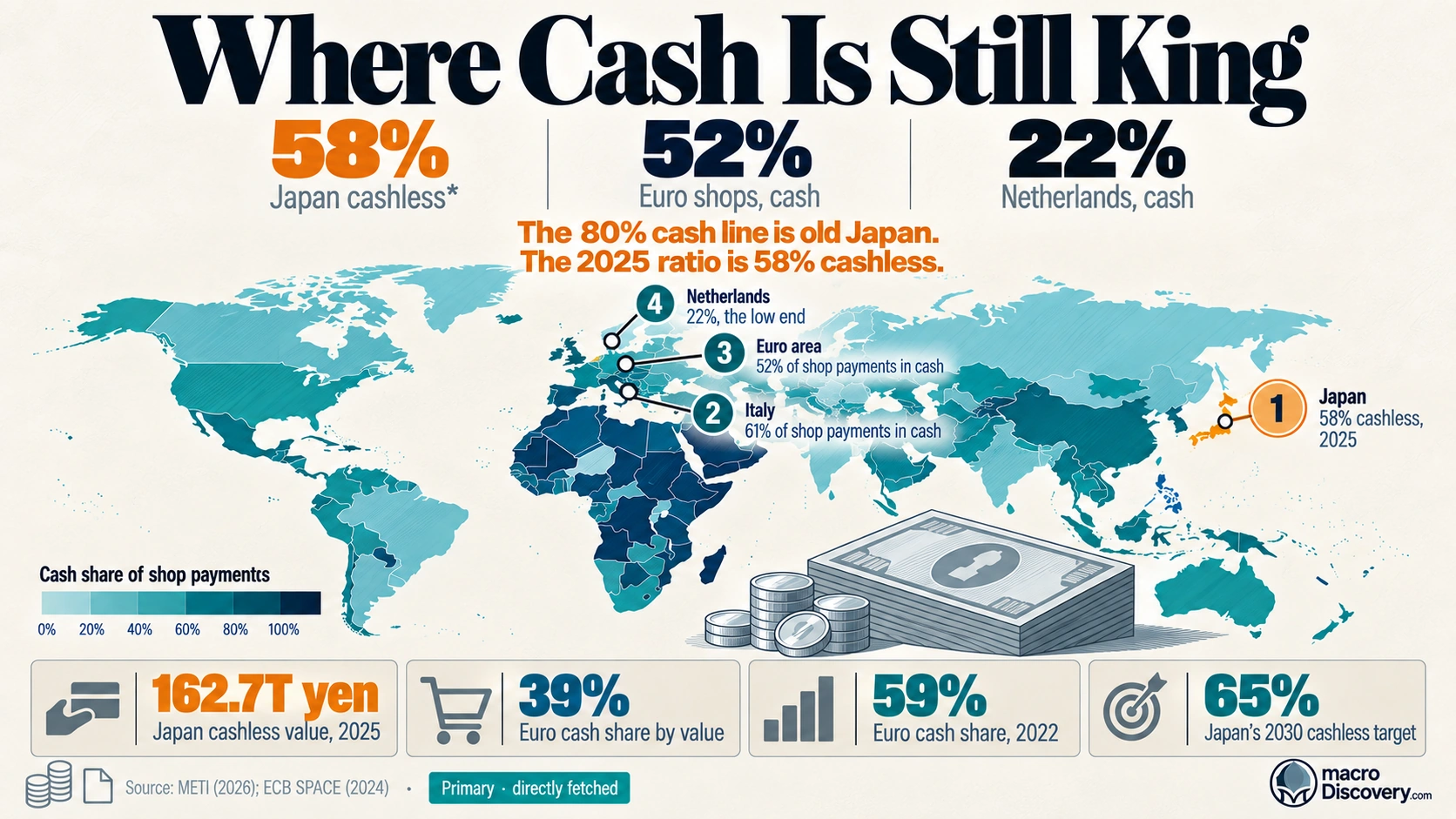
“The dirtiest air used to be in London and Pittsburgh. Now it’s in Bangladesh and Chad.”

What All 7 Clean Countries Have in Common

Iceland runs on 95% geothermal power. No coal, almost no burning at all. New Zealand gets 80% of energy from renewables. The Bahamas, Barbados, and Grenada are small islands — ocean winds carry pollution away. Estonia cleaned up after Soviet-era heavy industry closed. None of these countries needed to be the richest. They just stopped burning things.

Why it matters: clean air is a choice — not a privilege. Any country can make it.

Why the Worst Air Shifted from Europe to Asia and Africa

100 years ago, London and Pittsburgh had the world’s worst air. Today it’s South Asia. The 9 most polluted cities are all in Central or South Asia. Byrnihat, India hit 128.2 μg/m³ in 2024 — 25 times the safe limit. Europe fixed its problem through laws and cleaner energy. That same path is open to every country right now.

Why it matters: this isn’t a new problem — it’s the same one rich countries already solved.
Africa · The Data We Don’t Have
1 in 3.7M
Africa has just 1 air quality sensor per 3.7 million people.
Zero African cities met the WHO standard in 2024. And Africa is the least monitored continent on earth. The real air quality there is almost certainly worse than the data shows.
Source: IQAir World Air Quality Report 2024 (primary)

Wildfires Are the New Threat — Even for Clean Countries

In 2025, fewer cities had clean air than in 2024. Wildfires were the reason. Canada and Europe had record fires. Smoke spread across regions that historically had clean air. Even Scandinavia struggled. Australia’s 2019–2020 bushfires temporarily made Sydney’s air worse than Beijing. Decades of clean air policy can vanish in one bad fire season.

Why it matters: clean air isn’t permanent. Climate change makes wildfires worse every year.
Policy Signal · First Global Deadline
2040
The WHO set a deadline: halve air pollution deaths by 2040.
The WEF named air pollution a top global risk for the first time in 2025. The world is finally treating this like the emergency it is — not a local problem, but a global one.
Source: WHO World Health Assembly 2025 · IQAir World Air Quality Report 2025 (primary) · WEF Global Risks Report 2025
Key Numbers at a Glance
Air Quality · Annual Deaths
7M
People die from dirty air every year. It’s the 4th biggest cause of early death globally.
WHO + IQAir 2024
Air Quality · Cities Passing
14%
Only 14% of cities passed the WHO air test in 2025. Down from 17% in 2024 — because of wildfires.
IQAir 2025 (primary)
Air Quality · Life Stolen
2.3 yrs
The average person loses 2.3 years of life to air pollution. That’s 17.8 billion years lost worldwide every year.
IQAir 2024 (primary)
Air Quality · Global Target
2040
The WHO wants to cut air pollution deaths in half by 2040. The first global deadline of its kind.
WHO World Health Assembly 2025
Frequently Asked Questions
Which country has the cleanest air in the world?
Iceland — with air below 3 μg/m³. It runs on 95%+ geothermal and hydro power, so almost nothing burns. New Zealand, Australia, Estonia, Grenada, Barbados, and the Bahamas also passed the WHO test in 2024. Source: IQAir 2024 (primary).
Which country has the worst air quality in the world?
Chad, with an average of 91.8 μg/m³ — 18 times the safe limit. Bangladesh (78.0) is second. The most polluted city on earth is Byrnihat, India, at 128.2 μg/m³. Source: IQAir World Air Quality Report 2024 (primary).
How many people die from air pollution each year?
Around 7 million people die every year. That makes air pollution the 4th biggest cause of early death globally. Each person loses an average of 2.3 years of life from breathing dirty air. Source: WHO + IQAir 2024 (primary).
What percentage of cities meet WHO air quality standards?
Only 17% in 2024, falling to 14% in 2025. Wildfires were the main reason for the drop. Oceania is the cleanest region — 57% of its cities passed. Asia is the worst — 97.7% of cities failed. Source: IQAir 2024 & 2025 (both primary).
Why does Africa have so little air quality data?
Only 1 monitoring station per 3.7 million people. That’s the least of any continent. Yet Chad and DR Congo are already among the world’s most polluted countries. The real situation is probably much worse than the numbers show. Source: IQAir 2024 (primary).
Sources
  • IQAir — World Air Quality Report 2024 (primary · March 11, 2025 · 7th annual edition · 40,000+ stations · 138 countries · 7 countries clean · Chad 91.8 · Bangladesh 78.0 · DR Congo 58.2 · India 50.6 · Byrnihat 128.2)
  • IQAir — World Air Quality Report 2025 (primary · 9,446 cities · 143 countries · 14% compliance · wildfires 1,380 Mt carbon)
  • WHO — Ambient Air Quality and Health (primary · who.int · PM2.5 guideline 5 μg/m³ revised 2021 from 10 μg/m³)
  • Medical Device Network — World Air Quality Report: health impacts (March 2024 · Iceland 95% geothermal/hydro · NZ 80% renewables · David Kurtz, GlobalData)
  • Earth.org — All But 7 Countries Faced Unsafe Air Pollution Levels in 2024 (April 2025 · 2.3 years life lost · 17.8B combined years · 99% breathe unhealthy air)
Macro Discovery

Sukh Dhaliwal

Sukh Dhaliwal is the founder of Macro Discovery, an independent digital publication covering AI, technology, science, future trends, and global innovation through visual storytelling and data-driven analysis.

Join WhatsApp

Join Now

Join Facebook

Follow us

Leave a Comment