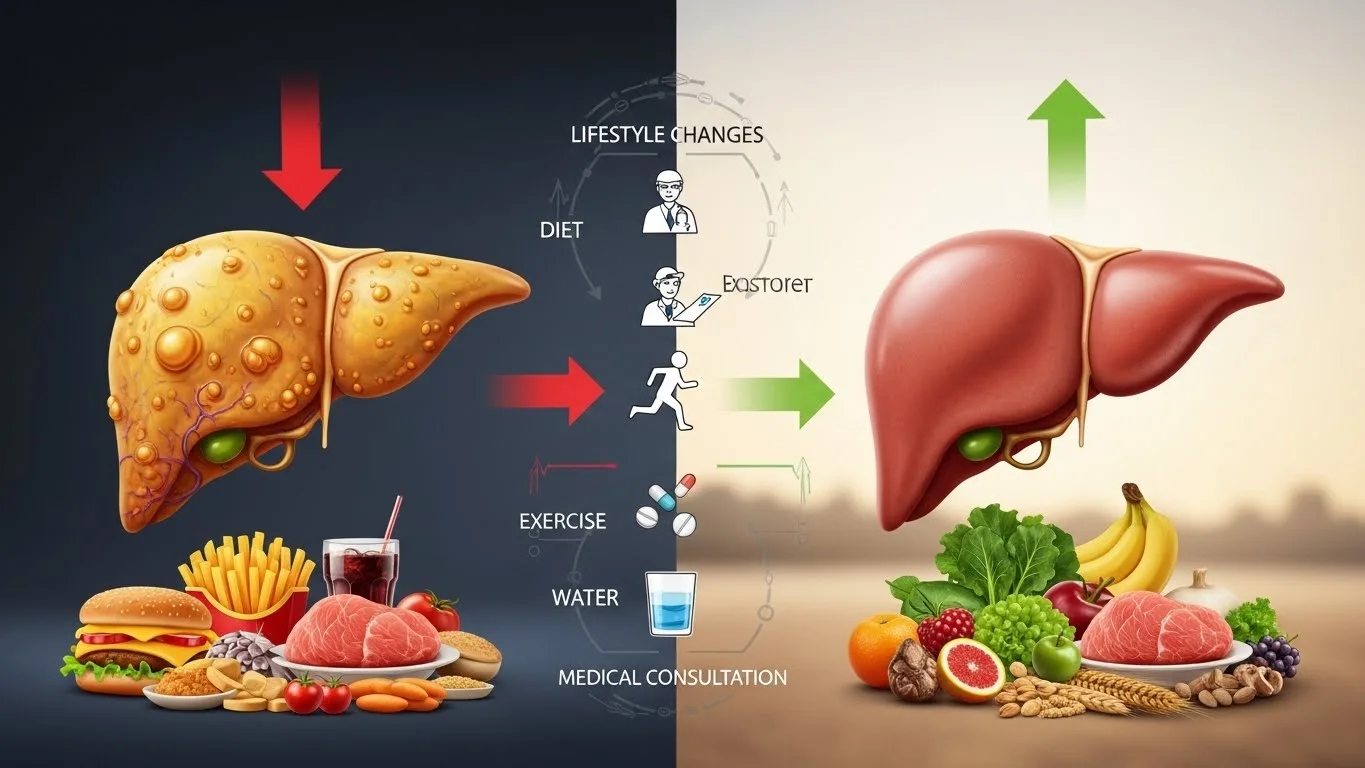
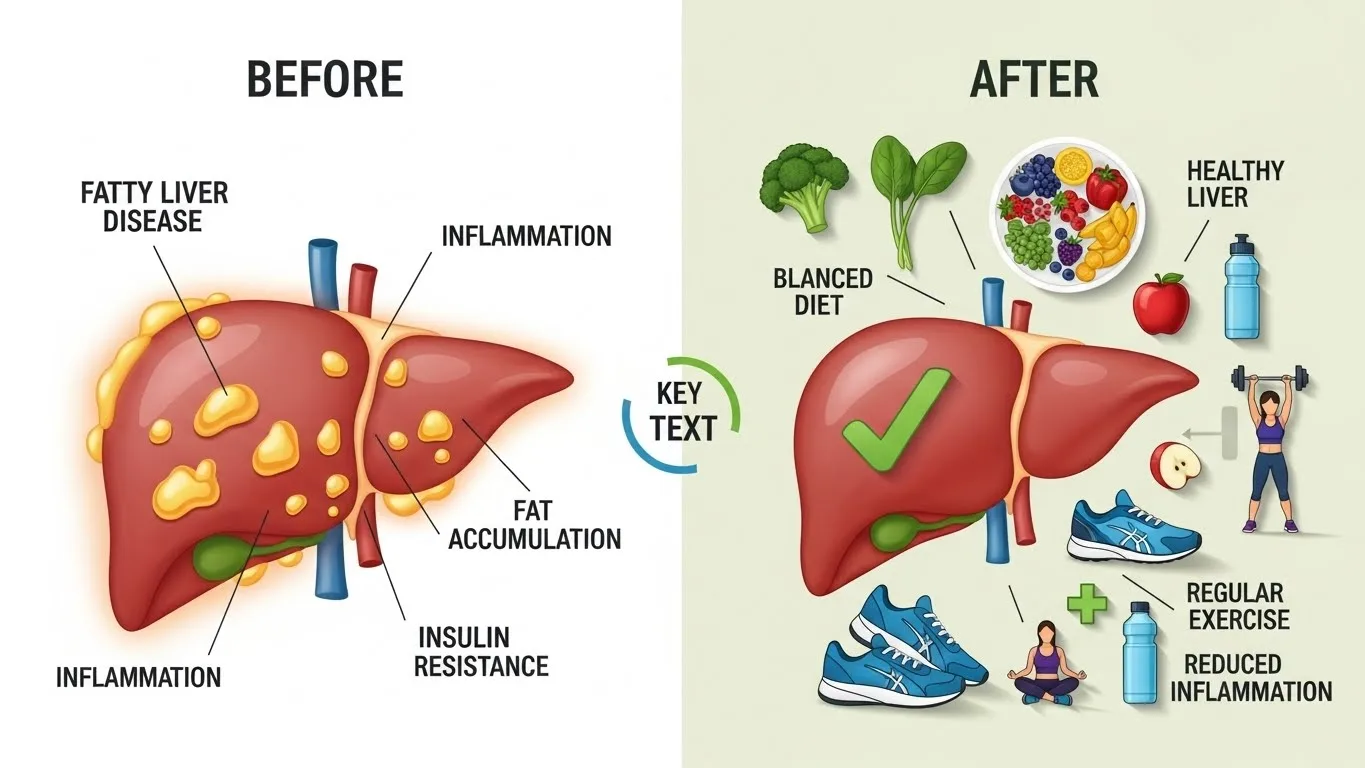
Reduce Fatty Liver Naturally: Reverse fatty liver naturally in just 90 days. Discover 7 simple daily diet changes that reduce liver fat, inflammation, and insulin resistance.
Fatty liver disease is often silent. Many people don’t realise anything is wrong until a routine test reveals excess fat in the liver. Once considered a condition linked mainly to heavy drinking or obesity, fatty liver is now increasingly common among people who rarely drink and maintain a normal weight.
The reason lies in modern lifestyles—high sugar intake, ultra-processed foods, irregular eating patterns, and chronic inflammation. The good news is that the liver is one of the most resilient organs in the human body. With the right daily habits, it can heal and regenerate itself.
In fact, research and clinical experience show that fatty liver can begin reversing within 90 days when consistent lifestyle changes are made. Here are 7 simple daily habits that can make a meaningful difference.
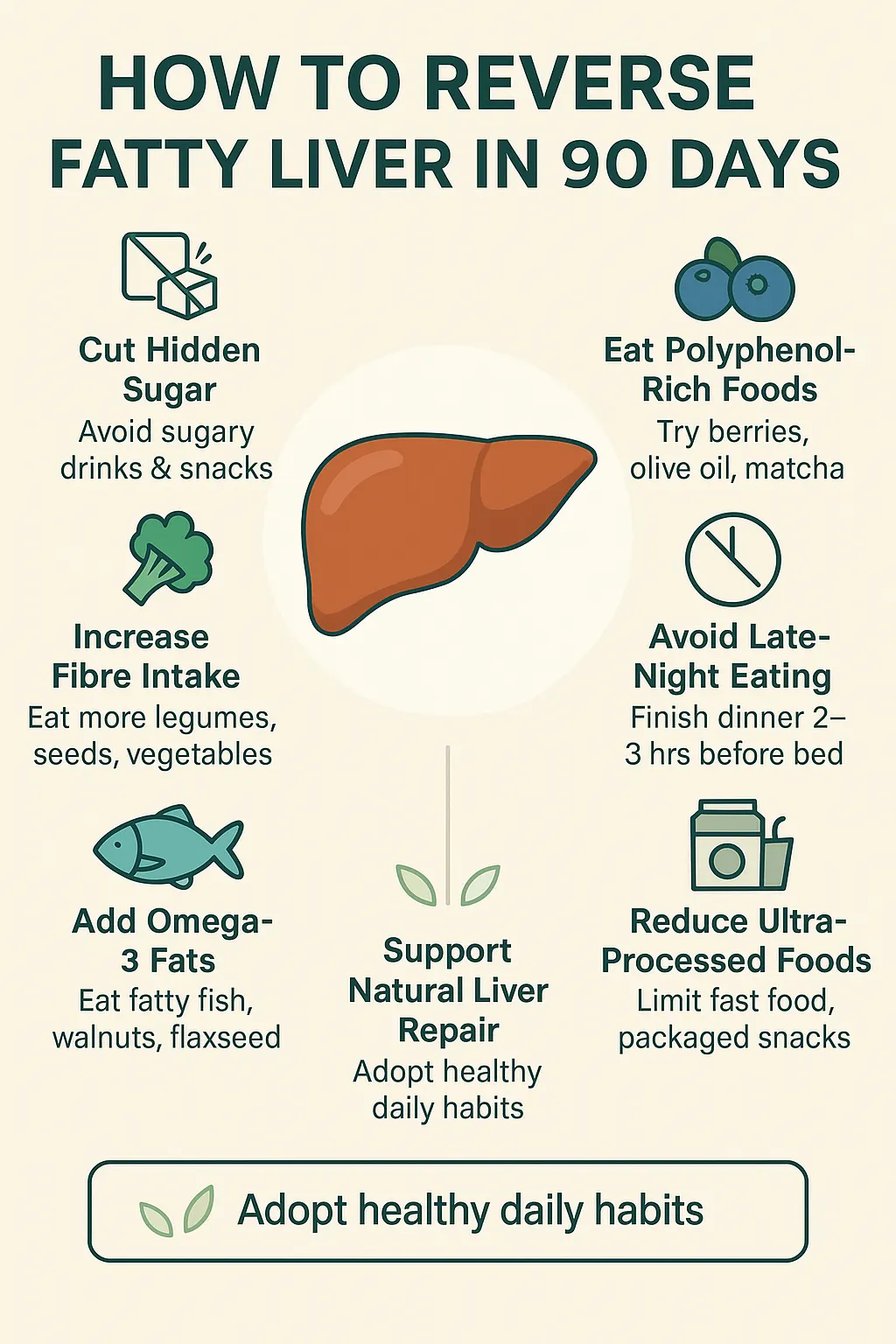
Here’s a simple visual guide to reversing fatty liver naturally.
1. Cut Hidden Sugar from Your Diet
Most people associate sugar with weight gain, but its impact on the liver is far more direct. Excess sugar—especially fructose—is converted into fat inside the liver, even in people who are not overweight.
Hidden sugars are often found in:
- Packaged fruit juices
- Flavoured yoghurts
- Energy bars and breakfast cereals
- Sauces, condiments, and “healthy” syrups
Reducing these foods can significantly lower liver fat. Choose whole fruits instead of juices—the fibre slows sugar absorption and protects the liver.
Daily habit: Read labels and limit foods with added sugar, corn syrup, or fructose.
2. Make Fibre a Non-Negotiable Part of Every Meal
Fibre does more than support digestion. It improves insulin sensitivity, reduces inflammation, and helps regulate fat metabolism—all essential for reversing fatty liver.
Excellent fibre sources include:
- Lentils, chickpeas, and beans
- Ground flaxseeds and chia seeds
- Oats and whole grains
- Cruciferous vegetables like broccoli and cauliflower
A fibre-rich diet helps reduce liver fat by controlling blood sugar spikes and improving gut health, which directly affects liver function.
Daily habit: Add at least one high-fibre food to every meal.
ये रिपोर्ट पढ़ें: How to Spot Hidden Cameras in Minutes (Using Your Phone)s.
3. Choose the Right Fats, Not Zero Fat
A common myth is that fatty liver requires eliminating all fats. In reality, the type of fat matters more than the amount.
Omega-3 fatty acids help reduce liver inflammation and fat accumulation. They also improve cholesterol balance and insulin resistance.
Best sources include:
- Fatty fish (salmon, sardines, mackerel)
- Walnuts
- Flaxseed and chia seed oil
At the same time, reduce omega-6-heavy refined vegetable oils and trans fats found in fried and packaged foods.
Daily habit: Replace refined oils with healthier fat sources in moderation.
4. Add Polyphenol-Rich Plant Foods
Polyphenols are powerful plant compounds that act like natural medicine for the liver. They reduce oxidative stress, support detox pathways, and improve insulin sensitivity.
Foods rich in polyphenols include:
- Berries
- Extra virgin olive oil
- Pomegranate
- Matcha green tea
- Turmeric (combined with black pepper for better absorption)
These compounds help the liver repair itself while reducing inflammation that worsens fatty liver disease.
Daily habit: Include at least one colourful plant-based food every day.
5. Respect the Liver’s Natural Repair Clock
The liver performs most of its repair work when the body is resting. Late-night eating keeps the liver busy digesting food instead of burning stored fat.
Regular late meals or snacking close to bedtime are linked to increased liver fat and poor metabolic health.
Daily habit: Finish your last meal at least 2–3 hours before bedtime and allow your body time to rest and repair.
ये रिपोर्ट पढ़ें: Top 20 Google Gemini AI Photo Prompts for Ultra-Realistic Images.
6. Reduce Ultra-Processed and “Diet” Foods
Many low-fat or diet-labelled foods appear healthy but are loaded with refined carbohydrates, artificial sweeteners, preservatives, and trans fats. These ingredients place extra stress on the liver.
Instead of packaged snacks, choose:
- Roasted nuts
- Fresh fruit
- Boiled chickpeas or sprouts
- Homemade snacks with minimal ingredients
Whole foods provide nutrients the liver can use, rather than chemicals it must filter.
Daily habit: Aim for foods with short, recognizable ingredient lists.
7. Be Consistent, Not Extreme
The liver responds best to steady, sustainable habits—not crash diets or extreme detox plans. Small daily changes maintained over weeks are far more effective than short-term fixes.
Even modest weight loss, improved blood sugar control, and reduced inflammation can lead to measurable improvements in liver health within 90 days.
Daily habit: Focus on progress, not perfection.
Final Thoughts
Fatty liver disease doesn’t develop overnight, and it doesn’t reverse overnight either. But with the right daily habits, the liver has an incredible ability to heal itself.
By reducing sugar, increasing fibre, choosing healthy fats, eating plant-rich foods, respecting meal timing, and avoiding ultra-processed products, you can naturally reduce fatty liver within 90 days and improve your overall metabolic health.
Disclaimer:
This article is for informational purposes only and does not replace professional medical advice. If you have been diagnosed with fatty liver disease or any other medical condition, consult a qualified healthcare professional before making dietary or lifestyle changes.